

How to Build Custom AI Workflows That Boost Ecommerce Automation Fast
Ecommerce teams face repetitive, time-consuming tasks that slow down growth and inflate costs. The solution is ecommerce AI automation, but many struggle to tailor AI workflows that actually fit their unique processes without coding expertise. This guide teaches you how to build custom AI workflows quickly and effectively — empowering your team with digital employees and AI agents tools that handle operational work from start to finish.
By following these steps, you’ll unlock scalable business automation and reduce manual effort while maintaining full control and approval.
Key Takeaways
- Custom AI workflows allow precise control over business automation without coding.
- AI agents tools and digital workforce handle repetitive ecommerce tasks efficiently.
- Workflow AI platforms like DIMA simplify automation setup and monitoring.
- Combining triggers, agents, and approvals creates a reliable automated process.
- Starting with premade workflows and tweaking them accelerates rollout.
- Lead qualification and contact
- Client nurture follow-ups
- Meeting prep and recap
- Offer creation and sending
- Social media content posting
- Custom AI workflows unlock tailored ecommerce AI automation with no coding.
- Specialized AI agents tools and digital employees handle repetitive tasks reliably.
- Workflow AI platforms like DIMA Automation simplify building, monitoring, and controlling automation.
- Starting small and iterating ensures smooth rollout and scalable business automation.
Why Custom AI Workflows Matter for Ecommerce Automation
Off-the-shelf business automation tools often lack the flexibility ecommerce teams require. Custom AI workflows let you design precise sequences of tasks using AI agents specialized in Gmail, Drive, Slack, and more.
This approach leverages workflow AI to orchestrate digital employees that follow your unique rules, trigger conditions, and approval steps. As a result, you avoid the pitfalls of generic automation that creates bottlenecks or errors.
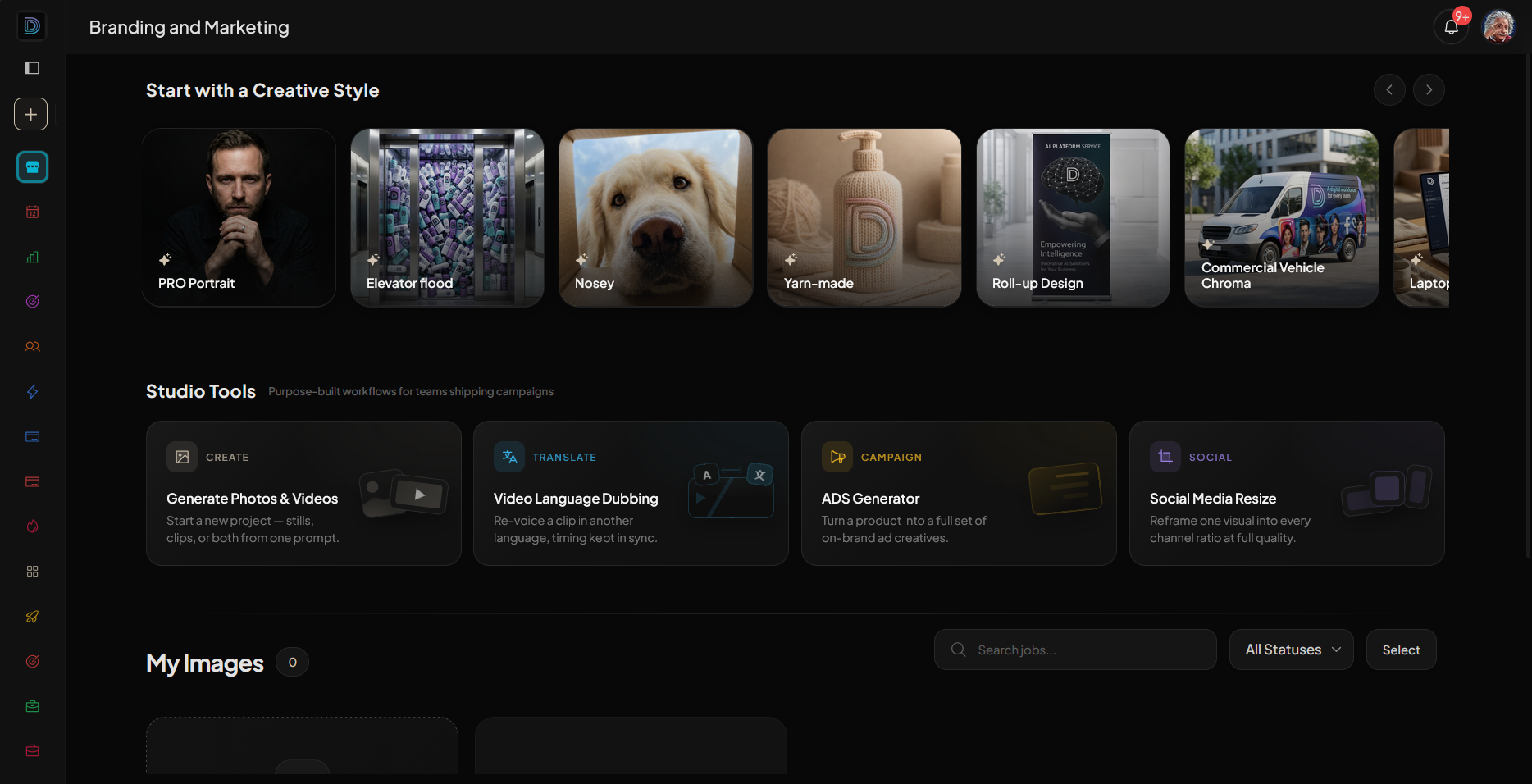
DIMA Automation offers a marketplace full of ready-to-use AI workflows and agents you can customize instantly without code. This lowers the barrier for marketing and ops teams to deploy robust AI business automation.Step 1: Identify Repetitive Tasks Ideal for Automation
Start by listing recurring, manual processes consuming your team's time. Common ecommerce examples include:
Focus on jobs with clear inputs and outputs that don’t require creative human judgment but do need accuracy and timeliness.
Step 2: Choose AI Agents Tailored for Each Task
Select AI agents tools from the digital workforce that fit your process goals. For example, an AI agent specialized in Gmail can send personalized emails, while a Drive agent can organize files or generate reports.
With DIMA’s agent lineup, you can pick from specialists in Google Workspace, Slack, social platforms, and AI models like OpenAI and Claude. You may also build custom AI agents by describing the role and shipping it with guardrails.
Step 3: Compose Your Workflow in Plain Language
Using workflow AI means you describe the outcome once — not every step — and the platform assembles the workflow automatically. For example, you might say:
> "Find new leads, send intro emails, schedule follow-up reminders, and prepare offer drafts."
DIMA’s automation builder converts that into a connected, multi-agent workflow. You can review, tweak, and approve the sequence before going live.
Step 4: Set Triggers and Approvals to Keep Control
Determine when your workflow should run: on a schedule, a manual start, or conditional triggers like receiving a new lead.
Approval steps ensure you remain in control. For example, an AI agent drafts an email but waits for your review before sending. This balances automation speed with quality assurance.
Step 5: Monitor Workflow Progress with Visual Boards
Track your AI workflows on a live Kanban board that shows every task’s status, from waiting to running to completed or blocked. This visibility helps spot issues early and take over if necessary.
DIMA’s board interface provides detailed logs and real-time insights, reducing the need to dig through complex system logs.
Step 6: Iterate and Expand Your AI Business Automation
Start small with critical workflows, then gradually add more agents and processes. Use premade workflows from the DIMA marketplace as templates, tweak them to your needs, and scale your digital workforce.
Continuous improvement and regular reviews ensure your ecommerce AI automation stays aligned with business goals and adapts to new challenges.
Comparison: Custom AI Workflows vs. Generic Automation Tools
| Feature | Custom AI Workflows (DIMA) | Generic Automation Tools |
|---|---|---|
| Setup Complexity | Low code / no code with AI orchestration | Often requires coding or rigid templates |
| Flexibility | High — tailor agents and triggers | Limited by predefined connectors |
| Control | Approval workflows built-in | Varies, sometimes manual overrides only |
| Visibility | Live Kanban board with task tracking | Basic logs, less intuitive tracking |
| Integration Scope | Google Workspace, Slack, AI models, social media | Limited to common apps, fewer AI integrations |
Frequently Asked Questions
Can non-technical users build AI workflows?
Yes. Platforms like DIMA provide no-code automation builders that anyone on your team can use with simple prompts.
How do AI agents ensure data security?
DIMA scopes integrations per workspace and logs every action for transparency. Custom guardrails on AI agents also prevent unauthorized actions.
What kinds of ecommerce tasks can AI workflows automate?
Lead management, email campaigns, content preparation, meeting organization, offer generation, social posting, and more repetitive processes.
How fast can I deploy new AI workflows?
You can start with a premade workflow from the marketplace and customize it live in minutes, then scale deployment gradually.
Will automation replace my team?
No. AI workflows handle repetitive tasks so your human team can focus on strategic, creative, and high-value work while you keep final approval.
Conclusion
Ready to accelerate your ecommerce AI automation with a digital workforce? Start a free 7-day trial or book a demo to see how DIMA’s AI workflows can transform your business process automation today.
 DIMA
DIMA