

Business AI Adoption: 6 Key Challenges and How to Control AI Workflows
AI tools are transforming how businesses operate, but many organizations stumble during AI adoption due to overlooked challenges in managing AI work. This article helps marketing and operations leaders understand six common pitfalls in business AI adoption and provides actionable strategies to control AI workflows. By learning how to balance free AI access, maintain security, and optimize AI within integrated business systems, teams can unlock the true potential of AI work while avoiding costly mistakes.
Key Takeaways
- AI adoption faces hurdles like fragmented AI tools, security risks, and unclear workflow governance.
- Controlling AI workflows with structured processes reduces errors and protects business systems.
- Free AI tools offer benefits but require disciplined access and monitoring to avoid risks.
- Claude AI automation and similar platforms provide scalable workflow control with human oversight.
- Integrating AI tools into a unified workspace simplifies adoption and boosts team productivity.
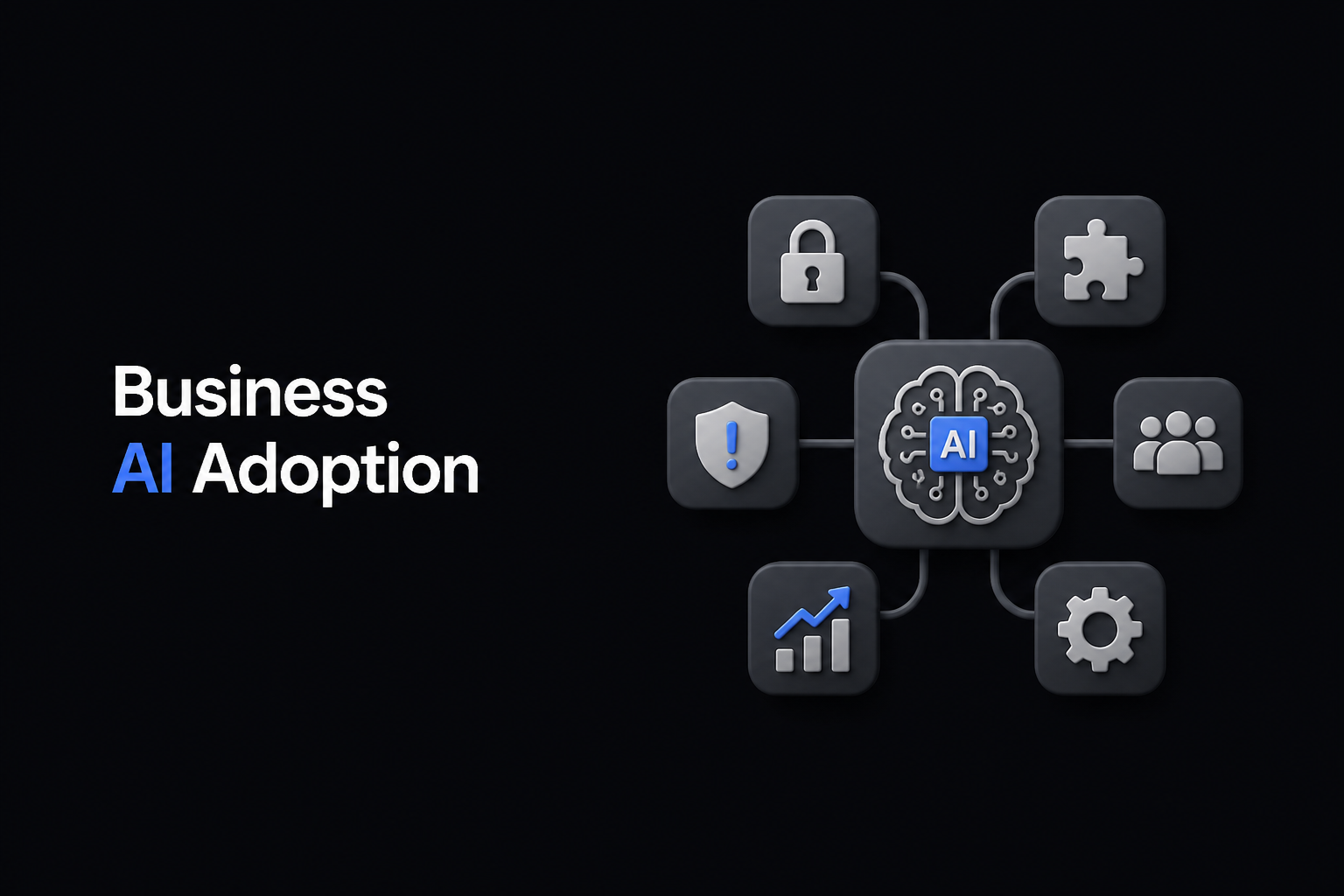
- Consolidate AI tools into a unified business system.
- Define governance policies with human approvals.
- Secure AI workspaces to protect data.
- Scale adoption with centralized monitoring.
- Engage employees through education.
- Balance automation with human oversight.
Challenge 1: Fragmented AI Tools Create Workflow Chaos
Many businesses adopt multiple AI tools without integration, resulting in disconnected workflows and duplicated effort. This fragmentation reduces transparency and complicates control over AI work.
To overcome this, companies should consolidate AI tools into a single business system that supports workflow automation and collaboration. Platforms like DIMA AI unify AI capabilities, allowing teams to manage projects, approvals, and AI output within one workspace. This approach reduces tool sprawl and streamlines business AI adoption.
Challenge 2: Lack of Clear AI Workflow Governance
Without defined policies and roles for AI usage, teams risk inconsistent quality, compliance issues, and accountability gaps in AI work. This challenge slows AI adoption and can expose businesses to operational risks.
Implementing governance frameworks that specify who can initiate AI tasks, approve AI-generated content, and audit AI outputs is essential. Workflow AI features enable assigning AI tasks with human-in-the-loop checkpoints, ensuring control without sacrificing speed. Learn more about AI workflow automation.
Challenge 3: Security and Privacy Concerns in Free AI Tools
Free AI tools are tempting for quick AI adoption but often lack enterprise-grade security controls. Unrestricted use can lead to sensitive data leaks or non-compliance with regulations.
Businesses should balance free AI access with secure workflows by restricting sensitive inputs and routing AI work through secured platforms. Solutions like Claude AI automation offer controlled environments with audit trails and data protection, enabling safe AI work integration.
Challenge 4: Scaling AI Adoption Without Losing Control
As AI adoption grows, maintaining control over multiple AI workflows becomes challenging. Without scalable controls, businesses risk workflow bottlenecks or unauthorized AI usage.
Scaling AI adoption requires centralized control dashboards and automated approvals to monitor workflow health and compliance. Using business systems that support multi-model AI and agents, like DIMA AI, helps maintain oversight while empowering teams to innovate with AI.
Challenge 5: Resistance to AI Work from Employees
Fear of job displacement or lack of AI skills can cause employees to resist AI adoption, hindering AI work effectiveness.
Education programs and transparent communication about AI’s role as an augmenting tool help ease concerns. Involving employees in designing AI workflows and approval steps fosters trust and smoother adoption. Check out DIMA’s approach to AI employee integration.
Challenge 6: Overreliance on AI Without Human Approval
Fully automated AI work without human review can introduce errors, bias, or quality issues, ultimately damaging business outcomes.
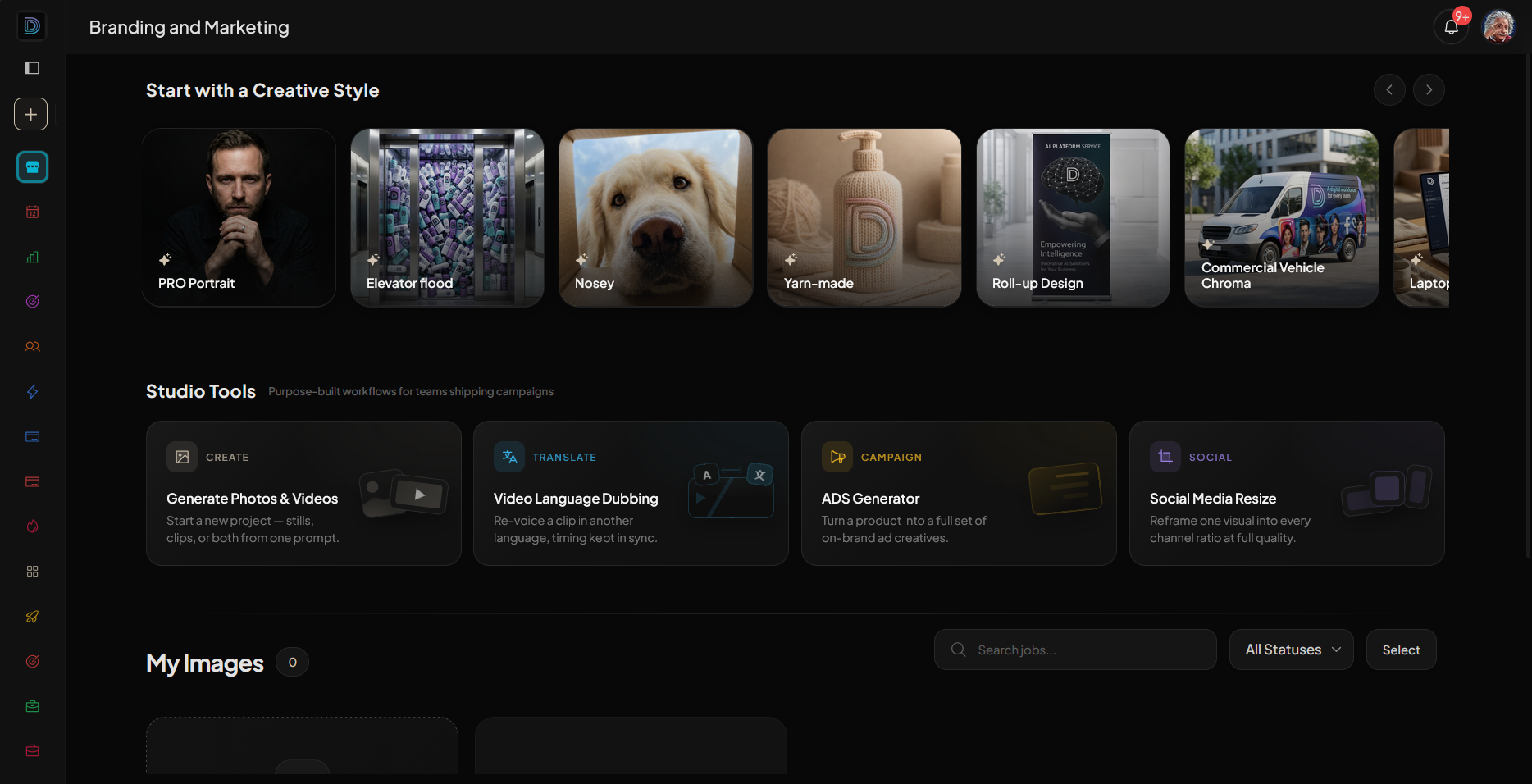
Integrating human approval stages into AI workflows ensures output quality and compliance. Platforms like DIMA AI Media Studio embed approval checkpoints before publishing, combining AI speed with human judgment effectively.
FAQ
What is the best way to control AI workflows in business systems?
Centralizing AI tools in a unified workspace with clear governance policies and human-in-the-loop approvals is the best practice for controlling AI workflows.
Can free AI tools be safely used for business AI work?
Yes, but they must be used within secure workflows that restrict sensitive data sharing and include oversight mechanisms to mitigate risks.
How does Claude AI automation help in business AI adoption?
Claude AI automation offers scalable workflow automation with built-in controls, enabling safe, efficient AI work with human review integrated.
How do I encourage employee buy-in for AI adoption?
Educate teams on AI benefits, involve them in workflow design, and emphasize AI as a productivity partner rather than replacement.
What are common mistakes that slow AI adoption?
Tool sprawl, lack of governance, neglecting security, ignoring employee concerns, and over-automation without human checks are frequent pitfalls.
Conclusion
Navigating business AI adoption requires awareness of common challenges and implementing practical controls for AI workflows. Key steps include:
For teams ready to control AI work efficiently and accelerate AI adoption, explore how DIMA AI offers an all-in-one workspace integrating Claude AI automation and more. Start your free trial today and take control of your business AI workflows.
 DIMA
DIMA