
AI that stays with the company.
That sentence dies the moment a client brief, a signed SOW, or last year’s fee letter is sitting in a personal ChatGPT upload history. Not in the firm’s drive. Not in the matter folder. In a consumer product that was built for a person, not for a practice.
The usual reaction is a policy. “Do not paste client files into ChatGPT.” Legal writes it. IT posts it. People nod. On Thursday the junior still drops the PDF into the free tab because the brief will not open in their head and the shared drive link is three folders deep. The policy did not fail because people are careless. It failed because the work still needs the file, and the only AI that will take it is the one on their phone.
Dust has been writing that AI deployments do not pay off when the work stays personal. Glean has been writing about the hidden labour of making AI usable, and about controlling spend once usage spreads. TrueLayer’s public version of the CTO conversation is the same story from the other side: someone on the team has been using Claude or ChatGPT for months, and leadership is still asking whether that is “the company” or “a person”. None of that is abstract for an 8–80 person EU shop. The file is the job.
The policy memo is the wrong product
A 25-person agency in Timișoara or Kraków does not lose client files because nobody read the handbook. They lose them because:
- The brief arrives as an email attachment.
- The person who can write the reply already lives in ChatGPT for drafts.
- Uploading the PDF there is faster than waiting for a “company AI” that does not exist yet.
- The upload history is invisible to the partner, the PM, and the next hire.
So the contrarian line is simple: stop treating this as a behaviour problem. Treat it as a system problem. If the only place the file can meet the model is a consumer chat, every useful person will keep doing that. You can fire them for it later. You cannot un-upload last quarter.
Legal already knows this. The NDA covers the client. It does not magically cover OpenAI’s consumer product, Claude’s free tier, or whoever sits next to the laptop on the train. “We have a policy” is a slide. The upload log is the system.
What the pattern looks like in a real firm
Agency. Account lead pastes the brand book and the last three decks into ChatGPT so the new concept deck “sounds like them”. The brand book never goes back into the shared brand folder with a version note. When the lead leaves, the next person rebuilds the voice from screenshots. Ecommerce. Merchandiser uploads the product sheet and competitor screenshots into a personal chat to draft PDPs. The sheet has supplier costs in a hidden column. Nobody in ops can see which chat still holds it. Legal / accounting. Associate drops a client memo PDF into Claude to tighten a clause. The memo is not privileged in that product the way it is in the firm’s DMS. The partner finds out when a second associate cannot find “the good version”. IT shop. Engineer pastes a customer runbook into ChatGPT to write the weekend reply. The runbook has hostnames and a temporary password from last month. The ticket system never saw that paste.
Same job every time: client file in a consumer tool because that is where the AI is.
Put the file where the company already works
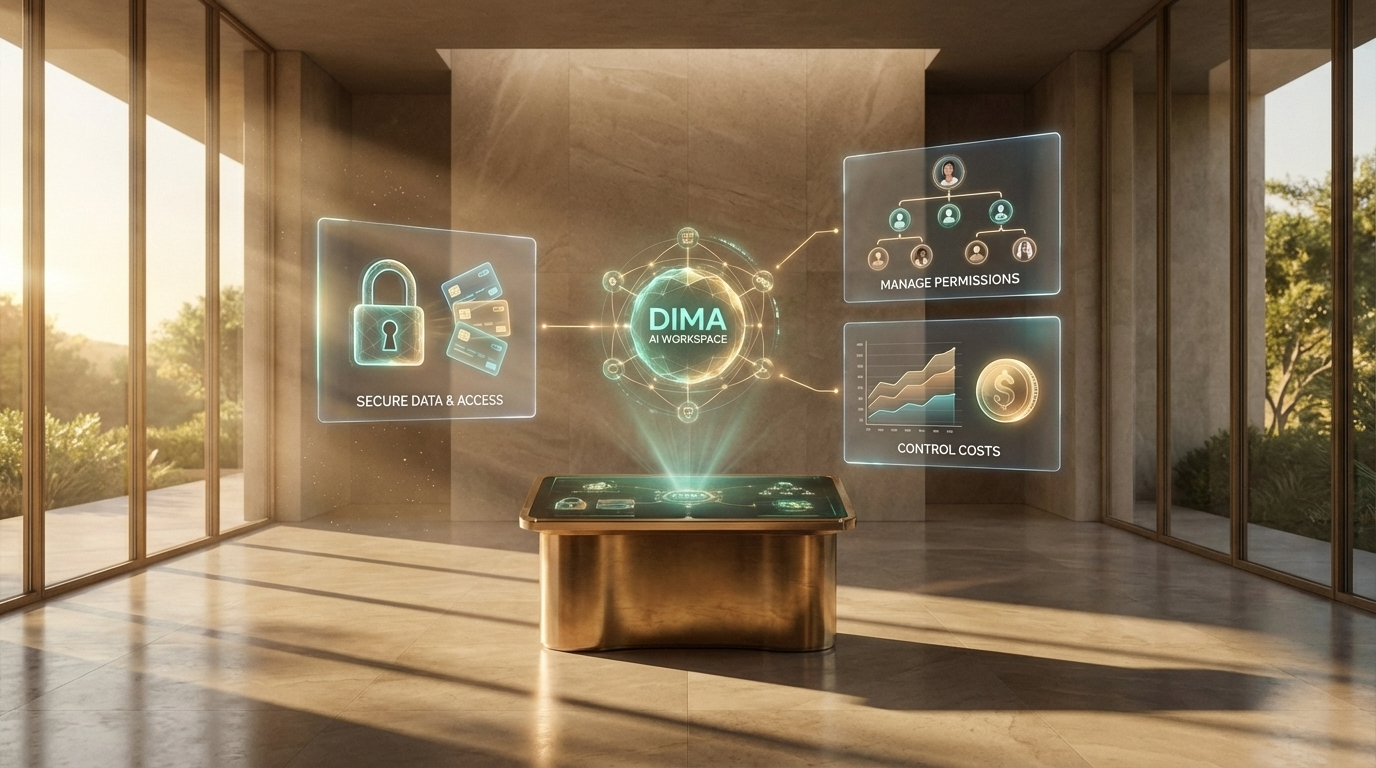
DIMA’s answer is not another lecture. It is a room the file can live in.
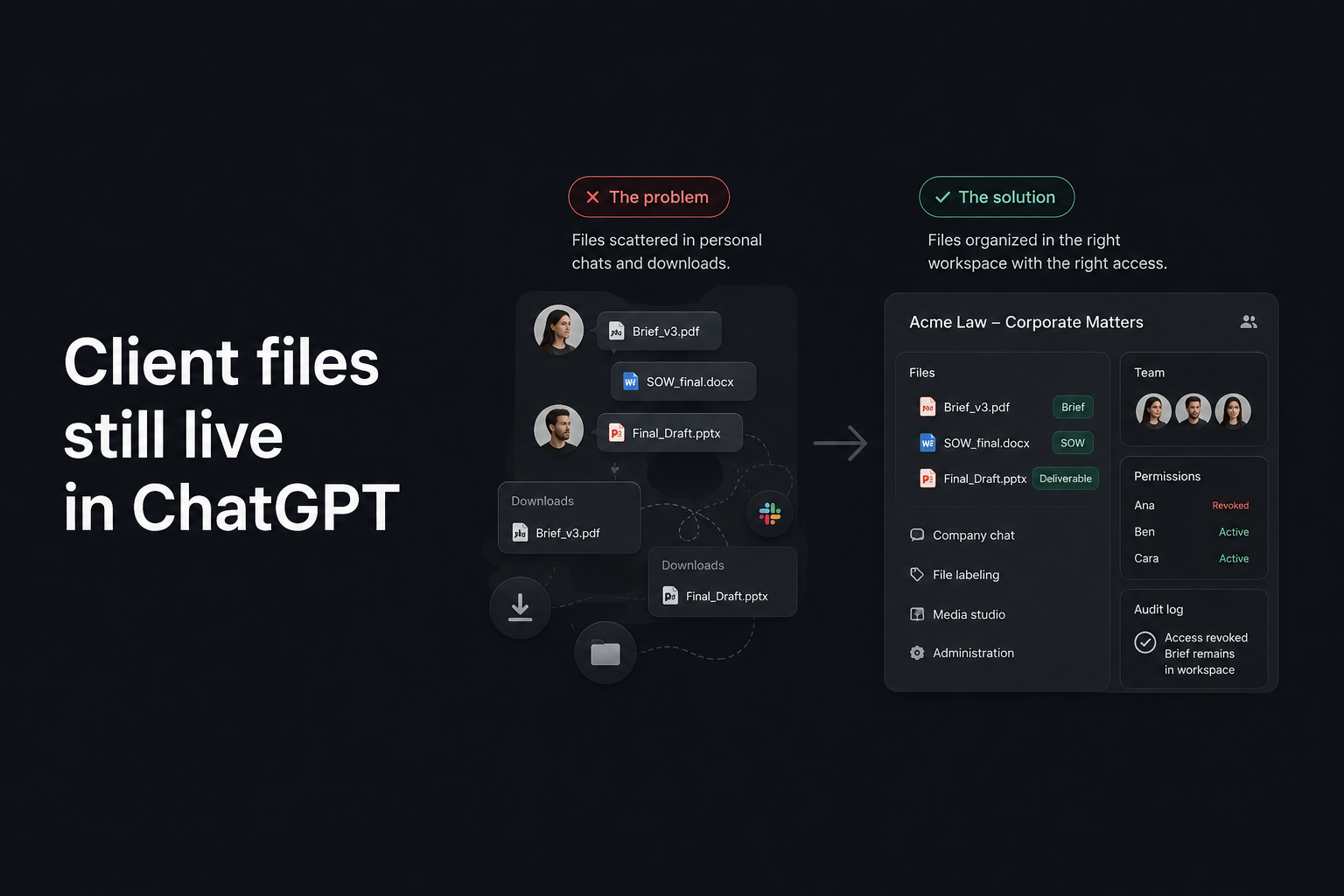
Put the client materials in a named workspace for the practice or the account, not in Ana’s downloads. Use file labeling so the brief, the SOW, and the last good deliverable are findable as files, not as “that chat from Tuesday”. Run the drafting in company chat on that file, so the next person opens the matter, not a personal history.
Administration is the part people skip and then regret. Issue company accounts. Revoke them. The client PDF stays in the workspace. That is the only offboarding test that matters for this job. If revoking Ana also revokes the only copy of the brief, you never had company files. You had Ana’s ChatGPT.
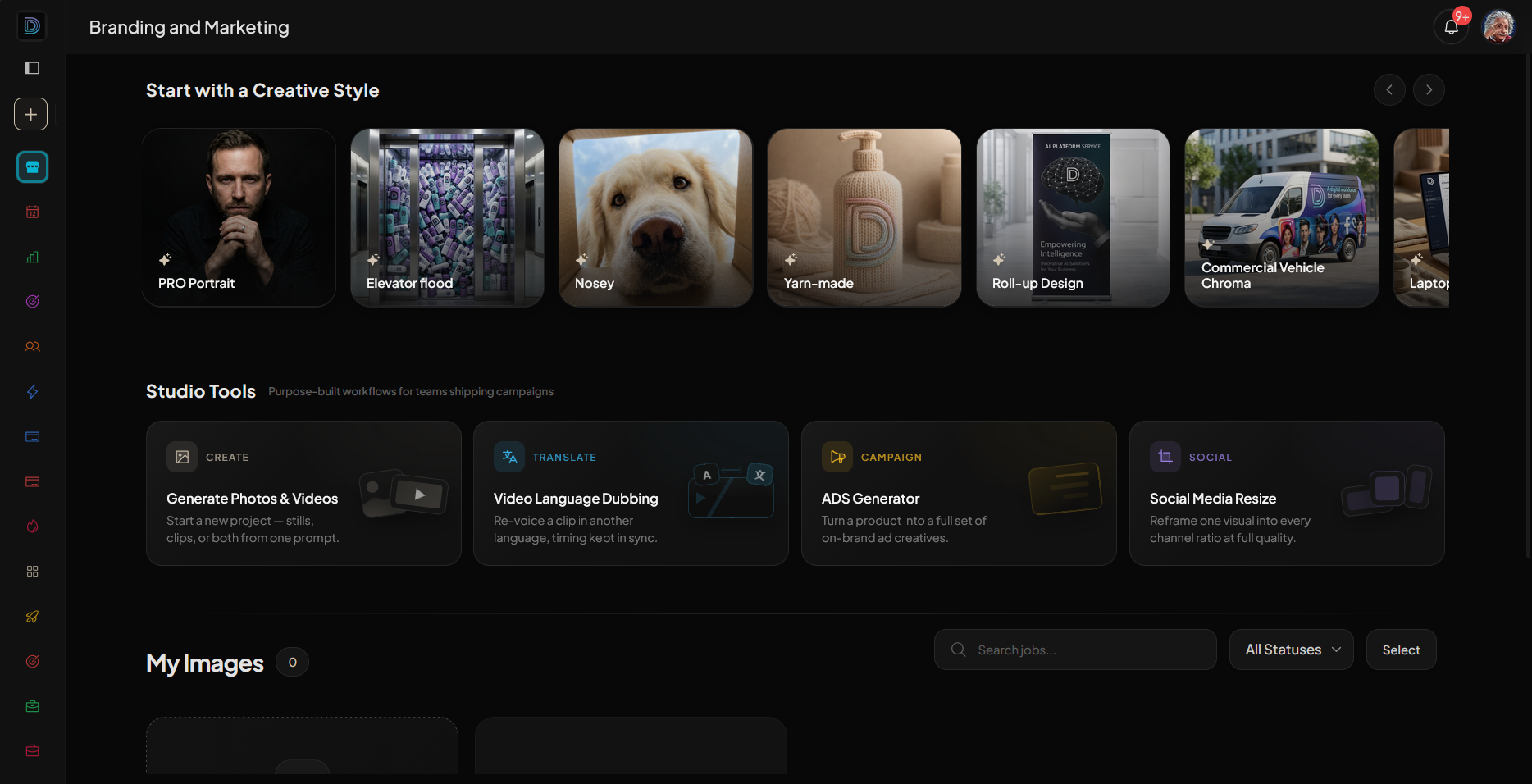
If the team needs fill-in on repeating forms, that is file labeling and the document job inside the same room, not a fresh upload into a consumer tab every Friday. If media needs the catalog, that is media studio with the assets already in the workspace, not a designer’s private Midjourney plus a ZIP in Slack.
What this is not
It is not “ban ChatGPT”. People will keep a personal account for personal life. The line is client files and company work.
It is not a six-month DLP programme before anyone can draft again. A 40-person firm can move the three folders they already paste this week. Start there.
It is not Copilot-only because the firm lives in Word. If the leak is happening in browser chats, the fix has to meet the chat, not pretend everyone will suddenly stay inside Outlook.
It is not “EU residency as a later upsell” either. For this job the first question is simpler: does the file leave the company when someone pastes it. Hosting matters. Visibility matters more on day one.
Dust’s collaboration writing and Glean’s governance writing are both pointing at the same gap from enterprise height. For this ICP the gap is smaller and uglier: the client PDF is already in a consumer product, and the slide deck still says “we use AI securely”.
The check that kills the slide
Ask out loud, in the next ops meeting:
- Which client files were uploaded to a personal AI tool in the last 14 days.
- Can a second person open those same files inside a company room without asking for a forward.
- If that person’s access disappeared at lunch, would the files still be there.
- Does anyone still re-paste the brand book or the SOW because “the AI doesn’t have it”.
If (1) is “we don’t know” and (4) is yes, you do not have AI that stays with the company. You have AI that borrows the company and keeps the receipt.
If you already arrived on a ChatGPT Teams alternative search, run the same four questions. A company card on a chat product is not the fix if the files still live in personal upload history.
Move one live client folder into a workspace. Attach it once in company chat. Stop re-uploading it. If you want a human in the room for the first hour, book it. Or start on that job with the file that is already leaving today.
 DIMA
DIMA