

How to Manage Business AI Risks Without Slowing AI Adoption
As businesses increasingly turn to AI tools to automate workflows and enhance productivity, many leaders face a dilemma: how to manage the risks associated with AI without hampering AI adoption and innovation. Overly cautious controls and complex policies can slow down AI work and reduce the benefits AI brings to your business system. This guide offers practical steps to strike the right balance — enabling secure, compliant AI adoption while keeping your teams agile and efficient.
Key Takeaways
- Risk management and AI adoption can coexist without one blocking the other.
- Define clear AI usage policies that empower users instead of restricting them.
- Implement layered controls that allow safe experimentation with free AI tools and automation.
- Use integrated platforms like DIMA to centralize AI workflows and maintain oversight.
- Continuously monitor and adapt AI governance to evolving business needs and technologies.
- Specify approved AI tools and their intended use cases.
- Clarify data handling requirements when using AI tools, including free AI platforms.
- Outline approval workflows for sensitive AI work.
- Encourage reporting of AI errors or ethical concerns.
- Simplifies monitoring AI tool usage across teams.
- Enables consistent application of policies.
- Reduces tool sprawl and data silos.
- Supports layered automation with human-in-the-loop controls.
- Usage analytics to spot unusual patterns.
- Feedback loops from AI users.
- Updates to policies reflecting new AI capabilities or regulatory changes.
- Training sessions to keep teams aligned on best practices.
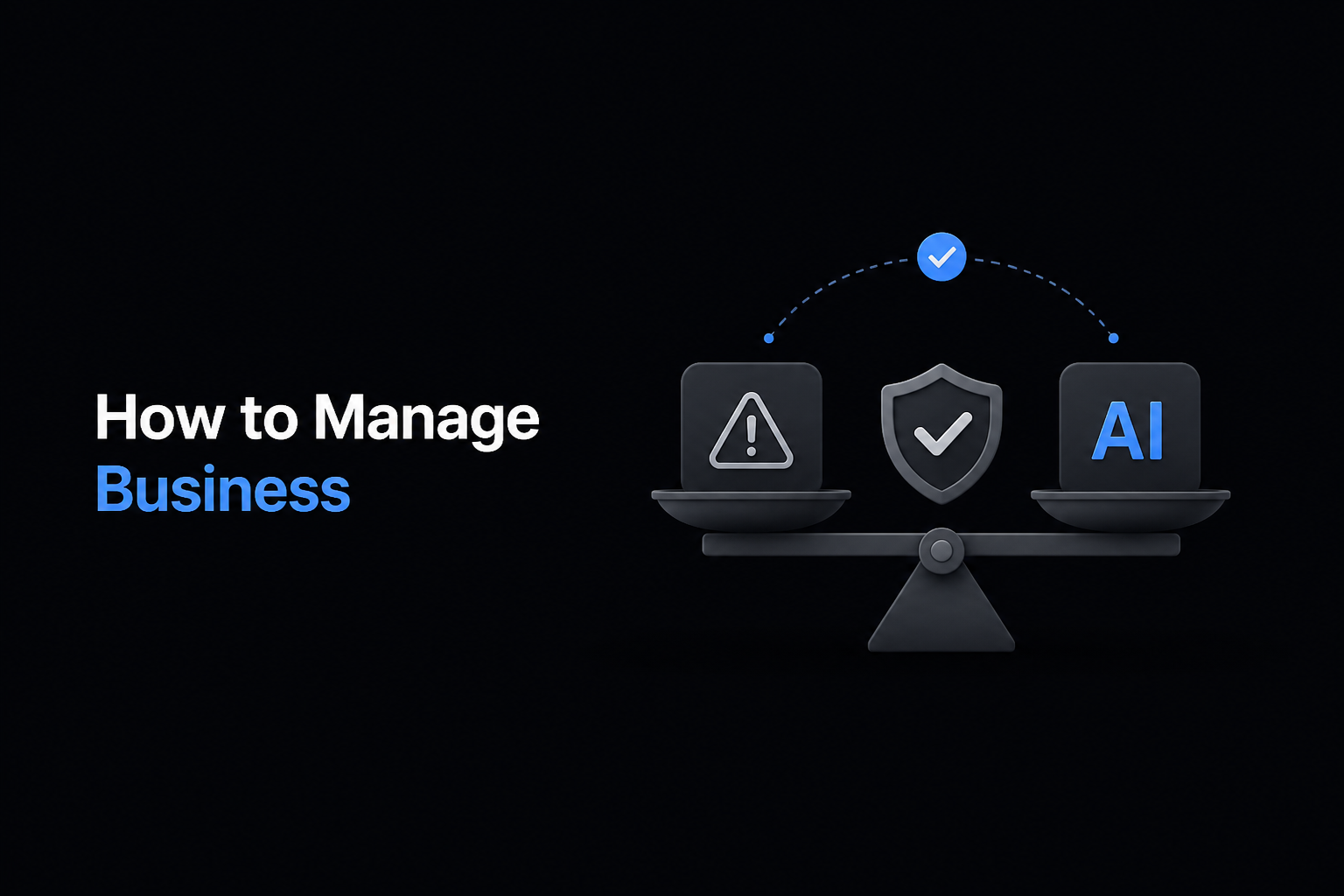
- Balance AI risk management with adoption by crafting clear policies and layered controls.
- Use tiered access to safely leverage free AI alongside premium AI tools.
- Centralize AI workflows with platforms like DIMA for transparency and control.
- Continuously monitor and adapt AI governance to keep pace with evolving risks.
Understanding the Risks in Business AI Adoption
The primary risks in AI adoption include data leakage, biased outputs, regulatory non-compliance, and loss of control over automated decisions. Business systems integrating AI need safeguards to protect sensitive data and ensure AI tools align with company values and legal requirements. However, these safeguards must be designed to avoid excessive friction that discourages adoption or forces users to bypass controls.
Creating Clear, Practical AI Usage Policies
A common mistake is writing vague or overly restrictive AI policies that confuse users. Instead, policies should:
Clear policies help users understand boundaries without feeling policed, fostering responsible AI work.
Balancing Free AI Access with Security
Free AI tools are tempting for teams but pose security risks if unmanaged. Consider a tiered access model:
| Access Level | Allowed AI Tools | Monitoring Approach |
|---|---|---|
| Open Access | Selected free AI tools | Usage logs, output audits |
| Controlled | Premium AI tools via platform | Integrated workflow approvals |
| Restricted | Sensitive AI workflows | Human review and approval |
This approach lets teams innovate with free AI, while critical business processes use secure, auditable AI automation like Claude AI automation integrated in business systems.
Centralizing AI Workflows for Better Control
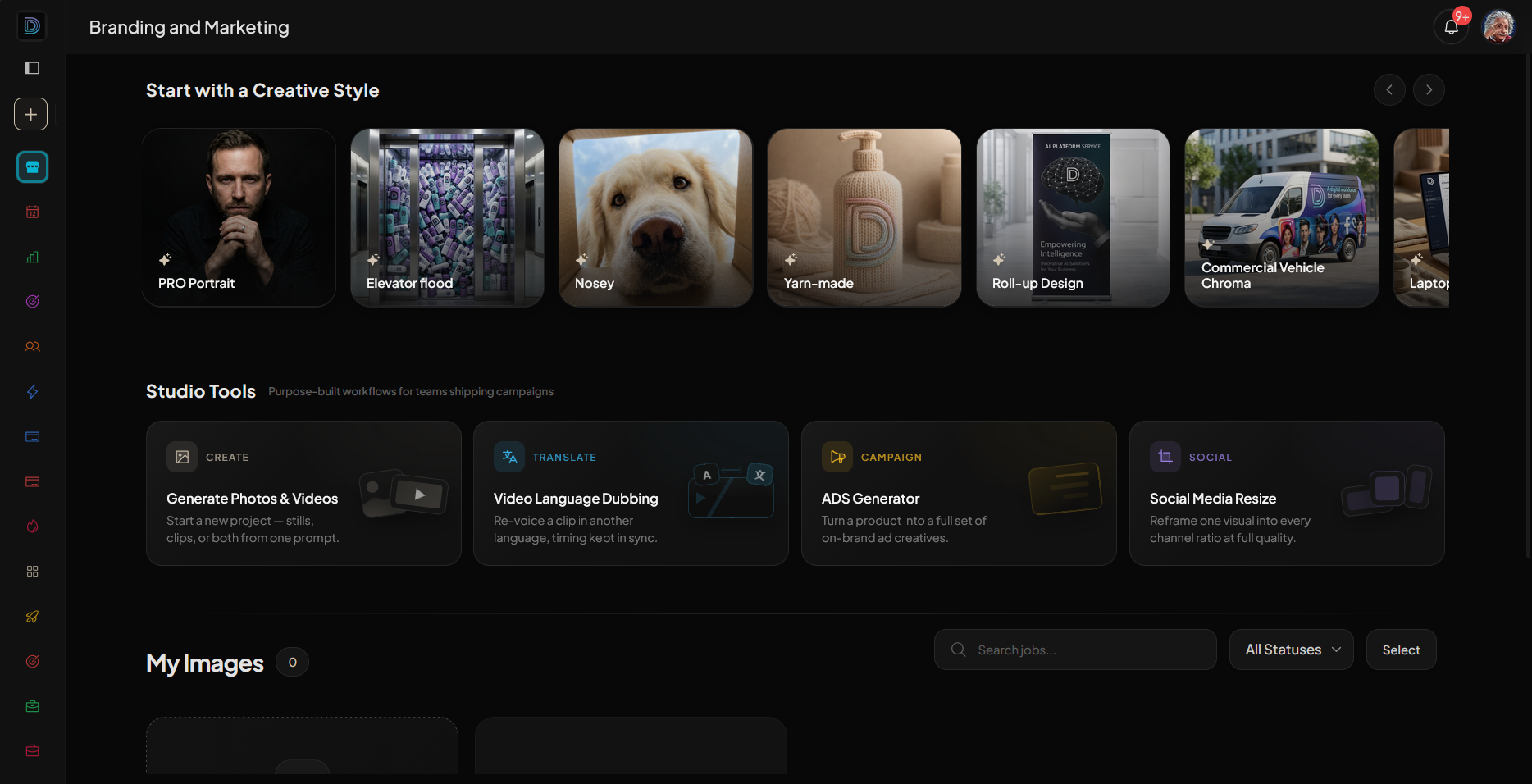
Using an all-in-one platform like DIMA allows businesses to unify AI work, approvals, and compliance checks in one workspace. Centralization:
This structure helps maintain control without throttling AI-driven productivity.
Continuous Monitoring and Adaptation
AI technologies and risks evolve rapidly. Regularly revisit your AI governance with:
Agile governance ensures your business system remains secure and efficient as AI adoption scales.
FAQ
How can I prevent AI misuse without blocking user creativity?
Encourage experimentation within defined safe zones by using layered access and clear policies. Use integrated platforms to monitor without micromanaging.
Is it possible to safely use free AI tools in business?
Yes, by limiting free AI tool use to non-sensitive tasks, monitoring outputs, and educating users about data risks.
What role does automation play in managing AI risks?
Automation can enforce compliance with policies, route approvals, and flag risky AI outputs, reducing human error and oversight gaps.
How does Claude AI automation help control AI work?
Claude AI automation enables safe, scalable AI workflows with human approval steps, audit trails, and centralized management suited for business systems.
What should I look for in an AI workspace platform?
Look for integration capabilities, workflow automation, compliance features, user access controls, and analytics to manage AI adoption effectively.
Conclusion
Take control of your AI work without slowing innovation: start your free trial or schedule a demo at DIMA AI today.
 DIMA
DIMA