



AI Automation: A Complete Guide for Business Owners in 2026
AI automation is transforming how businesses operate, enabling companies to eliminate repetitive tasks, enhance decision-making, and unlock unprecedented levels of productivity. If you're a business owner or manager wondering whether AI automation is worth the investment, the answer is a resounding yes. The technology has matured beyond the hype cycle, and early adopters are already seeing measurable returns that separate industry leaders from those struggling to keep pace.
The global AI market reached approximately $244 billion in 2025 and is projected to exceed $800 billion by 2030. This explosive growth reflects a fundamental shift in how businesses approach operational efficiency. But understanding what AI automation actually means—and how to implement it successfully—remains a challenge for many organizations.
Key Takeaways
-
Revenue impact is substantial: Industries heavily exposed to AI are experiencing 3x higher growth in revenue per employee, demonstrating that AI investments are paying off at scale.
-
Workforce transformation, not replacement: AI automation augments human capabilities rather than eliminating jobs. Workers with AI skills now command a 56% wage premium, up from 25% just a year ago.
-
Implementation requires strategy: Successful AI automation starts with identifying repetitive, high-volume tasks before moving to more complex decision-support systems.
-
The time to act is now: Skills for AI-exposed jobs are changing 66% faster than other roles, meaning businesses that delay adoption risk falling behind competitors who embrace the technology.
What Is AI Automation and Why Does It Matter?
AI automation combines artificial intelligence with traditional automation to create systems that can learn, adapt, and improve over time. Unlike basic automation that follows rigid rules, AI-powered automation uses machine learning to discover patterns, make decisions, and take actions with minimal human intervention.
Think of it like upgrading from a basic thermostat to a smart home system. The traditional thermostat follows your preset schedule. An AI-powered system learns your preferences, anticipates your needs based on weather forecasts, and optimizes energy usage automatically.
The Four Stages of AI-Powered Automation
According to IBM, modern AI automation operates through four interconnected stages:
-
Discover: AI cuts through unstructured data to detect patterns and classify information automatically. A properly trained model can categorize documents, match alerts to trouble tickets, and surface insights humans might miss.
-
Decide: By combining business and IT automation, AI enables faster and more accurate decision-making across departments. This convergence allows organizations to correlate activities across different systems.
-
Act: Robotic process automation (RPA) enhanced with AI moves beyond simple scripts to function more like digital employees, executing tasks with contextual awareness.
-
Optimize: The system continuously learns from outcomes, refining its approach to deliver better results over time.
Pro Tip: Start by automating tasks where the decision criteria are clear and the volume is high. Customer service inquiries, invoice processing, and data entry are ideal starting points.
Real-World Applications Driving Results
The practical applications of AI automation span virtually every business function:
-
Customer service: PayPal deployed AI chatbots handling 65% of message-based customer inquiries, allowing human agents to focus on complex issues while maintaining service quality.
-
Content moderation: YouTube increased reliance on automation software for content review when workforce availability was limited, demonstrating AI's ability to scale operations rapidly.
-
Sales operations: AI tools analyze customer interactions to predict buying intent, prioritize leads, and suggest optimal outreach timing.
-
Financial processes: Automated invoice matching, expense categorization, and fraud detection reduce processing time by up to 80%.


The Business Case for AI Automation
Let's be honest: every new technology promises to transform your business. What makes AI automation different is the measurable impact early adopters are already demonstrating.
Productivity and Revenue Gains
PwC's 2025 Global AI Jobs Barometer reveals compelling evidence that AI investments are paying off. Since 2022, when awareness of AI's capabilities surged, revenue growth in industries positioned to adopt AI has nearly quadrupled. Industries more exposed to AI are now seeing 3x higher growth in revenue per employee compared to less exposed sectors.
This isn't about replacing workers—it's about amplifying what they can accomplish. The research shows wages are rising twice as quickly in AI-exposed industries, and even workers in highly automatable roles are seeing wage increases when they develop AI skills.
The Cost of Waiting
Every month you delay AI adoption, your competitors gain ground. Skills for AI-exposed jobs are changing 66% faster than other roles—more than 2.5 times faster than just last year. This skills earthquake means:
-
Hiring becomes more difficult as AI-skilled workers command premium salaries
-
Your existing processes fall further behind industry efficiency standards
-
Customer expectations shaped by AI-enhanced competitors become harder to meet
How to Get Started with AI Automation
Implementing AI automation doesn't require a massive upfront investment or a complete operational overhaul. The most successful implementations follow a measured, strategic approach.
Step 1: Identify High-Impact Opportunities
Start by auditing your current processes for tasks that are:
-
Repetitive and rule-based: Data entry, form processing, report generation
-
High-volume: Customer inquiries, transaction processing, document handling
-
Time-sensitive: Approval workflows, scheduling, inventory management
-
Error-prone when done manually: Compliance checks, data validation, calculations
Step 2: Choose the Right Tools
The AI automation landscape includes several categories of solutions:
|
Solution Type |
Best For |
Investment Level |
|---|---|---|
|
Chatbots & Virtual Assistants |
Customer service, internal helpdesk |
Low to Medium |
|
RPA Platforms |
Process automation, data migration |
Medium |
|
AI-Enhanced Analytics |
Decision support, forecasting |
Medium to High |
|
Custom AI Solutions |
Industry-specific workflows |
High |
For most businesses, starting with established platforms from vendors like Microsoft, Google, or specialized providers offers the fastest path to value. Custom solutions make sense once you've validated the approach and identified unique requirements.
Step 3: Build Internal Capabilities
The 56% wage premium for AI skills reflects genuine market demand. Investing in your team's AI literacy pays dividends through:
-
Better tool selection and implementation
-
Higher adoption rates across the organization
-
Ability to identify new automation opportunities
-
Reduced dependence on external consultants
Consider offering training programs, encouraging experimentation with AI tools, and creating roles specifically focused on automation strategy.

Step 4: Measure and Iterate
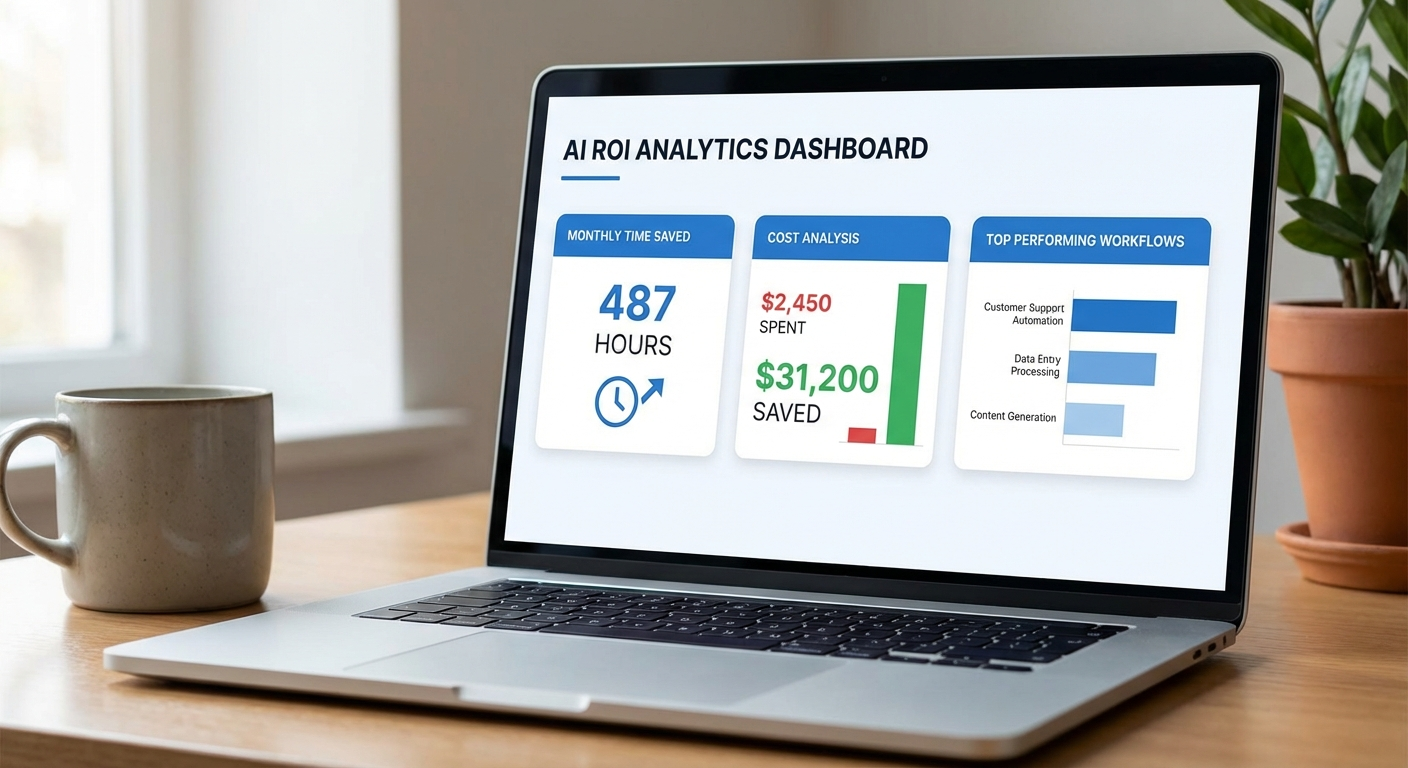
AI automation success requires clear metrics. Track:
-
Time saved on automated tasks
-
Error rates before and after implementation
-
Employee satisfaction with new tools
-
Customer experience improvements
-
Return on investment timelines
Common AI Automation Mistakes to Avoid
Automating the Wrong Processes
Not every task benefits from AI automation. Complex decisions requiring nuanced human judgment, creative work, and relationship-building activities often perform worse when fully automated. Focus on augmenting humans in these areas rather than replacing them entirely.
Neglecting Change Management
Technology implementation fails more often due to people issues than technical problems. Employees may resist automation out of fear for their jobs or frustration with new tools. Address these concerns proactively through clear communication about how AI will enhance rather than threaten their roles.
Expecting Immediate Perfection
AI systems improve through learning, which requires time and data. Initial results may disappoint if expectations aren't calibrated appropriately. Plan for a ramp-up period where the system learns from corrections and edge cases.
The Future of AI Automation
Agentic AI represents the next frontier, with sophisticated systems capable of reasoning and iterative planning to solve complex problems. These systems go beyond simple task automation to function as genuine digital colleagues capable of handling multi-step workflows with minimal oversight.
The market for agentic AI is expected to grow exponentially between 2025 and 2030, suggesting that today's automation investments are just the beginning. Companies building AI capabilities now will be better positioned to leverage these more advanced systems as they mature.
Frequently Asked Questions
What is AI automation exactly? AI automation combines artificial intelligence technologies like machine learning with traditional automation to create systems that can learn, adapt, and improve over time. Unlike rule-based automation, AI-powered systems can handle unstructured data, make decisions based on patterns, and optimize their own performance.
How much does AI automation cost to implement? Costs vary widely based on scope and complexity. Basic chatbot implementations might start at a few hundred dollars monthly, while enterprise RPA deployments can range from $50,000 to several hundred thousand dollars. Most businesses see positive ROI within 6-18 months depending on the use case.
Will AI automation eliminate jobs at my company? Research consistently shows AI augments rather than replaces workers. PwC's data indicates wages are rising even in highly automatable roles when workers develop AI skills. The technology handles routine tasks, freeing employees for higher-value work.
Where should we start with AI automation? Begin with high-volume, repetitive tasks that have clear success criteria. Customer service inquiries, document processing, and data entry are common starting points. These provide quick wins that build organizational confidence and fund further initiatives.
How long does it take to see results from AI automation? Most organizations see initial results within 2-3 months for straightforward implementations. Full value realization typically occurs over 6-12 months as systems learn from data and employees adapt to new workflows. Complex enterprise deployments may take 12-18 months for complete rollout.
Ready to explore how AI automation can transform your operations? DIMA-AI helps businesses identify high-impact automation opportunities and implement solutions that deliver measurable results. Whether you're just starting your AI journey or looking to scale existing initiatives, expert guidance makes the difference between successful transformation and wasted investment.
 DIMA
DIMA

 DIMA Team

 DIMA Team