


The Enterprise AI Software Buyer's Checklist: What Operations and IT Leaders Must Evaluate Before Signing
Choosing enterprise AI software is no longer about selecting the flashiest features. It's about finding a platform that integrates seamlessly, scales securely, and delivers measurable value across your organization. For operations and IT decision-makers, the stakes are high.
Worker access to AI rose by 50% in 2025, and 40% of enterprise applications will be integrated with task-specific AI agents by the end of 2026, up from less than 5% today. This rapid adoption means the wrong choice can lead to security vulnerabilities, compliance failures, and wasted budgets.
This guide provides a practical buying checklist covering security, user management, model access, integrations, and pricing models. By the end, you'll have a downloadable framework to evaluate AI platforms confidently.

Key Takeaways
-
Security and compliance are non-negotiable: 40% of respondents identify security and compliance as the primary obstacle to scaling agentic AI, making robust data protection your first evaluation criterion.
-
Integration complexity determines success: The top barriers to AI adoption in the enterprise are a lack of employee AI skills (35%), difficulty integrating AI with existing systems (29%), and data quality issues (29%).
-
Pricing models are evolving rapidly: Nearly half (49%) of AI vendors now employ hybrid pricing models, combining subscription fees with usage-based charges that can create budget volatility.
-
User management and access controls matter: Enterprise platforms must support role-based access, single sign-on integration, and granular permissions to prevent unauthorized AI usage.
-
Model flexibility drives long-term value: Platforms offering multiple model options and custom fine-tuning capabilities prevent vendor lock-in and adapt to evolving business needs.
Security and Compliance: Your First Line of Defense
Enterprise AI introduces new attack surfaces that traditional security frameworks weren't designed to handle. In many organizations, AI systems have moved from pilot projects to core infrastructure in less than two years. Yet security architectures have not evolved at the same pace. The result is a widening gap between where sensitive data actually flows and where security teams are looking.

Critical Security Features to Evaluate
Data encryption and privacy controls must extend beyond transport-layer security. Encryption protects data only until it is decrypted for processing. At that point, prompts may be exposed to application memory, runtime environments, debugging tools, observability platforms and administrative access. While transport encryption remains essential, it does little to reduce exposure once data reaches the systems that actually perform inference.
Compliance certifications and audit trails provide verification that vendors meet industry standards. Prioritize those that meet high security standards and compliance certifications such as SOC 2 Type II or ISO 27001. These certifications demonstrate that vendors have implemented proper controls for data handling, access management, and incident response.
Access controls and authentication prevent unauthorized AI usage. Prioritize AI tools that support leading IT governance frameworks, including granular access controls, single sign-on (SSO) integration, automated compliance management, and transparent data residency options.
Deployment Options and Data Sovereignty
Your deployment model determines who controls your data. Some platforms allow on-premises deployment or operation in your private cloud or virtual private cloud (VPC), giving you full control over your data environment.
For organizations in regulated industries, data residency requirements may dictate deployment choices. Customer data cannot leave secure network boundaries, regulatory compliance requires audit trails for all AI decisions, and data residency requirements limit cloud service options.
User Management: Controlling Access at Scale
As AI adoption expands across departments, managing who can access which models and data becomes critical. "Shadow Agents" are unsanctioned AI tools deployed by employees without IT approval. They now account for over 50% of enterprise AI usage, creating massive security risks. Because these agents often lack proper privacy guardrails, they can accidentally leak sensitive corporate data to public models.
Essential User Management Capabilities
Role-based access control (RBAC) ensures employees only access AI capabilities relevant to their role. Your platform should support custom role definitions, department-level permissions, and project-based access controls.
Single sign-on (SSO) integration streamlines authentication while maintaining security. Integration with identity providers like Okta, Azure AD, or Google Workspace reduces password fatigue and improves compliance tracking.
Usage monitoring and audit logs provide visibility into AI consumption patterns. Track which teams use which models, monitor token consumption by department, and identify unusual access patterns that may indicate security issues.
Training and onboarding workflows accelerate adoption while maintaining governance. 30% of large enterprises require AI fluency training as a condition of employment, making built-in training capabilities valuable.
Model Access: Flexibility Without Vendor Lock-In
The AI landscape evolves rapidly, with new models emerging monthly. Platforms that lock you into a single model provider limit your ability to optimize performance and cost over time.
Model Selection Criteria
Multi-model support provides flexibility to choose the best tool for each task. Generative AI is proving to be a powerful, flexible tool in the hands of motivated enterprises, with data and predictive analytics as the top AI workload. Overall, 62% of respondents cited data analytics among their top AI workloads. Generative AI was a close second at 61%.
Custom model fine-tuning allows you to adapt general-purpose models to your specific domain. Companies are seeing significant ROI when deploying and scaling highly specific applications that target a distinct business opportunity. The key to building highly specific and profitable AI applications is using open source and open weight models and software, which allows organizations to bring the right tools to solve specific problems and fine-tune models with their own data.
Model versioning and rollback capabilities protect against performance degradation. AI models can drift over time as data patterns change, requiring the ability to revert to previous versions quickly.
Transparent model provenance helps you understand what powers your AI. Enterprise buyers increasingly treat AI purchases as a separate procurement category, requiring data-handling policies, model-provenance documentation, and audit rights.
Integration Requirements: Connecting AI to Your Tech Stack
AI delivers value only when embedded into existing workflows. AI delivers value only when embedded into real workflows, not operating in isolation. Enterprises must consider deep engineering integration + API-based orchestration to operationalize AI across the enterprise.
Integration Architecture Essentials
Pre-built connectors accelerate deployment by eliminating custom integration work. Evaluate platforms based on native integrations with your core systems: CRM platforms like Salesforce and HubSpot, ERP systems including SAP and Oracle, communication tools such as Slack and Microsoft Teams, and data warehouses like Snowflake and Databricks.
API flexibility enables custom integrations when pre-built connectors don't exist. Modern enterprise AI integration relies heavily on API-first and event-driven architectures. These patterns allow AI to respond dynamically to enterprise events and operational changes.
Legacy system compatibility determines whether you can deploy AI without replacing existing infrastructure. Legacy systems often lack modern APIs, rely on batch-based processing, run on mainframes or monolithic architectures, and store data in inconsistent formats. AI integration in these environments becomes a major architectural transformation effort.
Data pipeline support ensures AI can access the information it needs. AI systems rely on reliable, accessible enterprise data. Organizations should evaluate whether their data infrastructure can support AI pipelines and real-time decision systems.
Integration Best Practices
Start with low-risk, high-impact use cases to prove value before expanding. Domain-specific AI implementations often yield the highest ROI in the shortest timeframe. Implement incrementally by migrating components in stages, focusing on your biggest pain points. Run parallel systems during transition periods to minimize disruption.
Pricing Models: Understanding Total Cost of Ownership
AI pricing has become increasingly complex as vendors experiment with new monetization strategies. AI's relative immaturity is creating major uncertainty around commercial models. Vendors are grappling with how to price AI features; whether entirely new pricing models should be deployed; and managing variable inference compute costs –all while encouraging AI adoption. Enterprise SaaS vendors' AI pricing is very much in an experimentation stage.
Common Pricing Models Explained
Subscription-based pricing offers predictability with fixed monthly or annual fees. Seat-based or tiered SaaS bundles are effective when AI costs per user are predictable and relatively low. Microsoft's Copilot ($30/user/month) uses this model. This approach is suitable when per-user inference costs remain below 15–20% of the subscription price, and customers prioritize budget predictability.
Usage-based pricing ties costs directly to consumption but introduces budget volatility. This model is common for generative AI platforms, APIs, and cloud-hosted services. The more you use, the more you pay. Difficult to predict spend, especially early in deployment or during usage spikes, and many tools don't have caps, alerts, or thresholds to prevent runaway usage.
Hybrid models combine base fees with usage charges. Many vertical AI companies are adopting hybrid models that blend a base subscription with usage or outcome-based tiers. This approach provides predictability for revenue forecasting and customer budgeting, and elasticity for expansion as usage scales or AI results improve.
Outcome-based pricing charges based on results delivered. There are already excellent examples of B2B software firms with outcome-based pricing models – meaning clients only pay for specified outcomes of a certain quality. Sierra, for example, is an AI-driven customer support vendor that only charges clients for customer tickets resolved by its AI agents.
Hidden Costs to Consider
Beyond advertised pricing, budget for implementation and integration expenses. Enterprise implementations typically cost 3-5 times the advertised subscription price when accounting for integration, customization, infrastructure scaling, and the operational overhead required to maintain AI systems in production manufacturing environments.
Training and change management represent significant investments. Implementation costs, including data preparation, integration, and staff training, often equal or exceed the software cost itself.
Ongoing maintenance and monitoring require dedicated resources. AI models are not static; they require continuous monitoring and optimization. Implement robust monitoring systems to track model performance, identify drift, and ensure ongoing accuracy. Regularly review the impact of AI initiatives against your defined KPIs.

Your Enterprise AI Evaluation Checklist
Use this framework to score potential vendors across five critical dimensions:
Security and Compliance
-
SOC 2 Type II or ISO 27001 certification
-
End-to-end encryption (at rest and in transit)
-
Role-based access controls (RBAC)
-
Single sign-on (SSO) integration
-
Audit logging and compliance reporting
-
Data residency options (cloud, on-premises, hybrid)
-
GDPR, HIPAA, or industry-specific compliance
User Management
-
Granular permission controls by role and department
-
Usage monitoring and analytics dashboard
-
Multi-tenant support for organizational hierarchies
-
Self-service user provisioning
-
Activity audit trails
-
Automated access reviews
Model Access and Flexibility
-
Multiple model provider support (OpenAI, Anthropic, Google, etc.)
-
Custom model fine-tuning capabilities
-
Model versioning and rollback
-
Transparent model provenance documentation
-
Support for open-source models
-
Performance benchmarking tools
Integration Capabilities
-
Pre-built connectors for your core systems (CRM, ERP, data warehouse)
-
RESTful API with comprehensive documentation
-
Webhook support for event-driven workflows
-
Legacy system compatibility (SOAP, batch processing)
-
Data pipeline integration (ETL/ELT tools)
-
Real-time and batch processing options
Pricing and Cost Management
-
Transparent pricing model (subscription, usage, or hybrid)
-
Cost estimation tools and calculators
-
Usage caps and budget alerts
-
Detailed billing breakdowns by team or project
-
Commitment discounts for predictable usage
-
No hidden fees for API calls, data storage, or support
Frequently Asked Questions
What's the difference between public and private AI deployment models?
Public cloud deployments host AI on vendor infrastructure, offering faster setup and lower upfront costs. Private deployments run on your infrastructure or dedicated cloud instances, providing greater control over data and compliance. Public LLMs are fast and cost-effective but may lack security for sensitive data. Private LLMs offer better control, security, and compliance, perfectly suited for an enterprise. Hybrid models combine the best of both: cost flexibility with data control.
How do I prevent "shadow AI" usage in my organization?
Shadow AI occurs when employees use unauthorized AI tools without IT oversight. They now account for over 50% of enterprise AI usage, creating massive security risks. Prevent this by providing approved AI tools that meet employee needs, implementing clear AI usage policies, monitoring network traffic for unauthorized AI services, and educating teams about security risks.
Should I prioritize open-source or proprietary AI models?
The choice depends on your requirements. The key to building highly specific and profitable AI applications is using open source and open weight models and software, which allows organizations to bring the right tools to solve specific problems and fine-tune models with their own data for deployment in generative and agentic applications. Open-source models offer customization and cost advantages, while proprietary models often provide better out-of-box performance and vendor support.
What ROI should I expect from enterprise AI software?
ROI varies by use case, but organizations report significant gains. Enterprise AI integration promises dramatic business transformation, with metrics showing 25-40% process efficiency gains and 15-30% cost reductions. However, MIT reports that 95% of companies are seeing no real return when AI is poorly implemented, emphasizing the importance of proper planning.
How long does enterprise AI integration typically take?
Integration timelines depend on complexity and organizational readiness. An MIT study found that only 5% of custom AI projects reach production, often due to underestimating integration challenges. Plan for 3-6 months for pilot projects and 12-18 months for enterprise-wide deployment, including data preparation, integration, testing, and training.
What's the biggest mistake companies make when buying AI software?
The most common mistake is focusing on features rather than integration and governance. AI doesn't fail because it's bad tech. It fails because the organization doesn't know how to operationalize it. Successful buyers evaluate how AI fits into existing workflows, who will manage it, and how to measure success before selecting a vendor.
Why DIMA-AI Is Built for Enterprise Decision-Makers
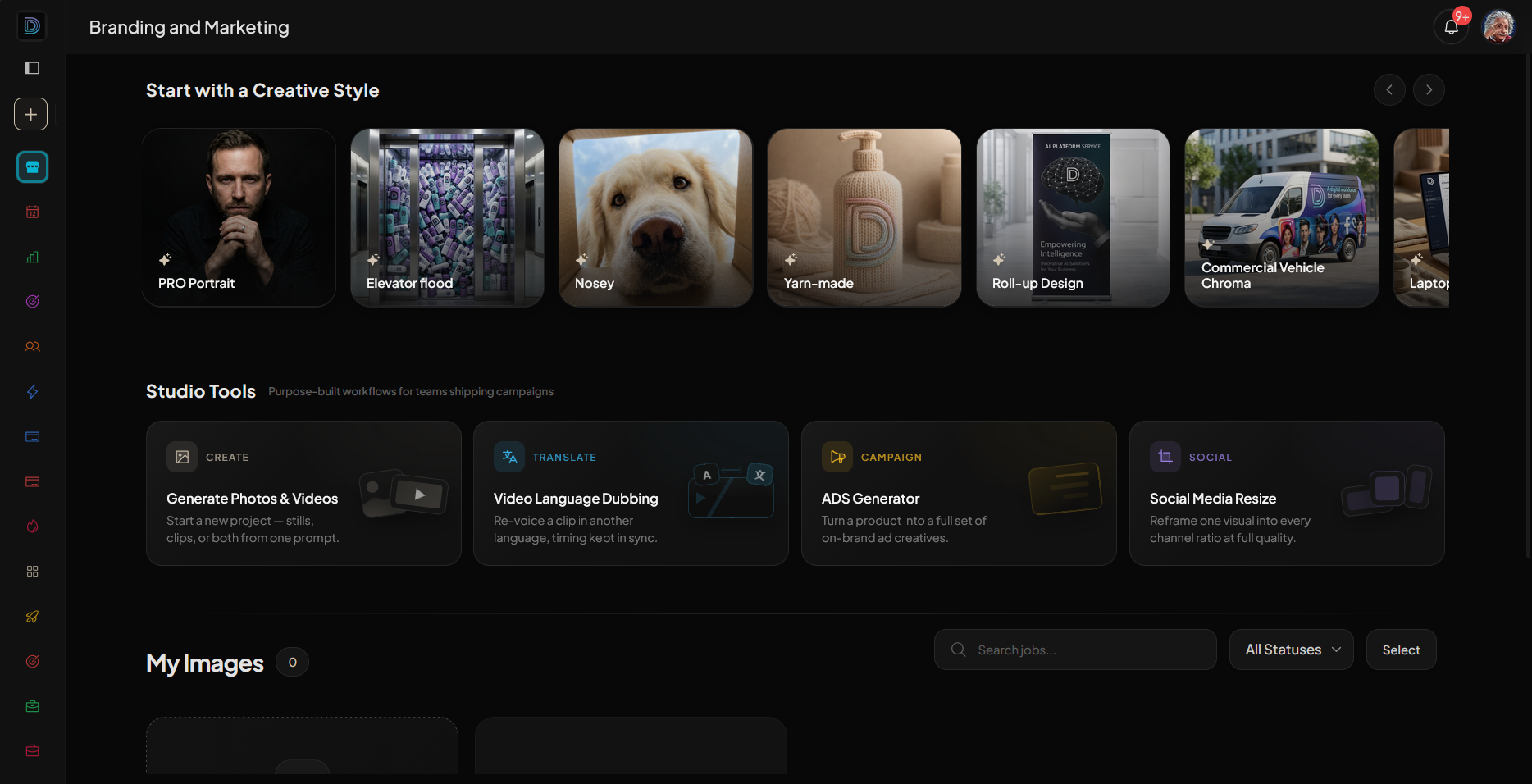
DIMA-AI addresses the core challenges outlined in this checklist with an enterprise-first approach designed for operations and IT leaders who need security, flexibility, and seamless integration.
Enterprise-grade security and compliance come standard, not as add-ons. DIMA-AI provides SOC 2 Type II compliance, end-to-end encryption, and flexible deployment options including private cloud and on-premises installations. Your data stays under your control with transparent data residency options.
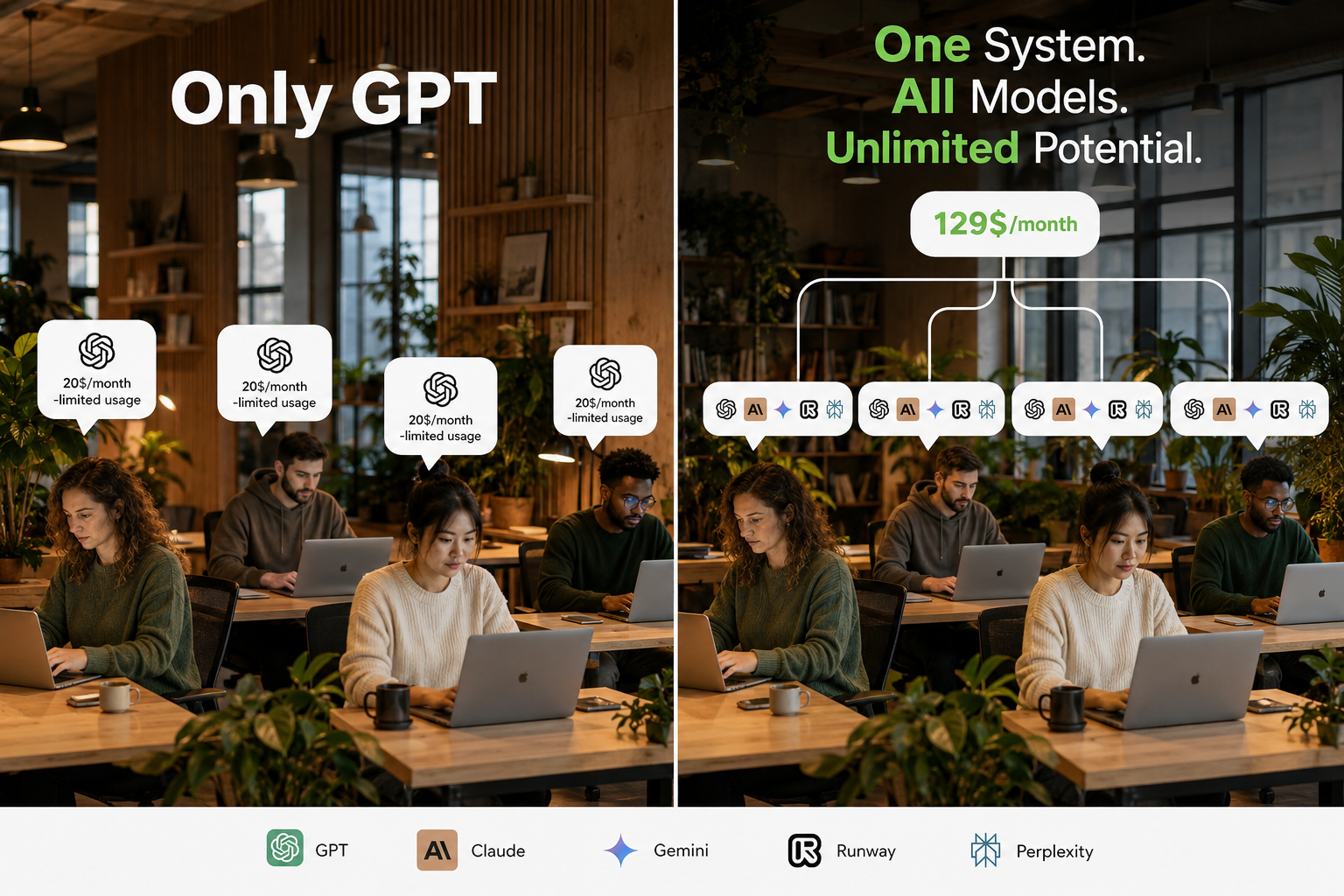
Flexible model access prevents vendor lock-in. Access multiple leading AI models through a single interface, switch between providers based on performance and cost, and fine-tune models on your proprietary data without vendor restrictions.
Seamless integration with your existing tech stack eliminates implementation headaches. Pre-built connectors for major CRM, ERP, and data warehouse platforms, robust API support for custom integrations, and legacy system compatibility ensure AI works within your current infrastructure.
Transparent, predictable pricing removes budget uncertainty. DIMA-AI offers hybrid pricing that combines base platform fees with usage-based scaling, detailed cost breakdowns by team and project, and usage caps and alerts to prevent unexpected charges.
Get started with DIMA-AI's enterprise evaluation at https://www.dima-ai.com and see how the right AI platform transforms operations without compromising security or control.
Conclusion
Selecting enterprise AI software requires evaluating far more than features and pricing. Security, user management, model flexibility, integration capabilities, and total cost of ownership determine whether your AI investment delivers value or becomes another failed pilot project.
Our 2026 AI report reveals that success hinges on the ability to move boldly from ambition to activation. Use this checklist to evaluate vendors systematically, prioritizing platforms that integrate with your existing systems, scale securely, and provide transparent governance.
The right AI platform doesn't just add capabilities—it transforms how your organization operates. Start your evaluation today with a clear framework, and choose a partner like DIMA-AI that understands the unique challenges operations and IT leaders face.
 DIMA
DIMA