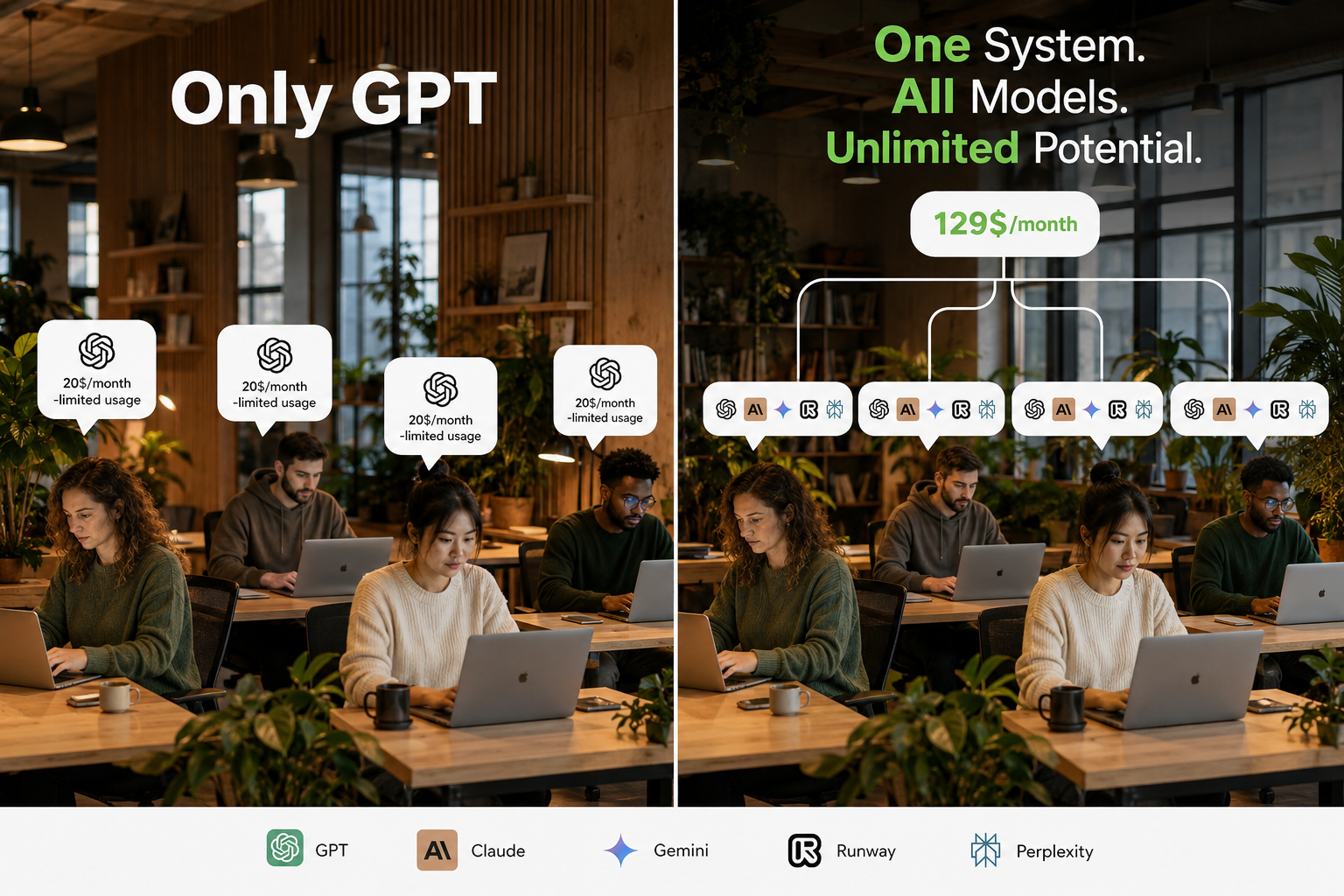



Despite widespread adoption, most organizations face a critical challenge. They're drowning in disconnected tools, struggling with fragmented workflows, and failing to capture the full value AI promises. The problem isn't a lack of AI tools—it's the sprawl of too many isolated solutions that don't work together.
This guide explores the full landscape of AI tools for business, the hidden costs of tool sprawl, and why unified AI platforms represent the future of enterprise productivity.
Key Takeaways
-
AI adoption is mainstream: 88% of organizations now use AI regularly in at least one business function, but most remain in experimental stages rather than achieving enterprise-wide transformation.
-
Tool sprawl undermines value: Disconnected AI solutions create inefficiencies, duplicate efforts, and prevent organizations from realizing the full potential of automation and intelligence.
-
Unified platforms deliver superior ROI: Organizations that integrate AI into cohesive workflows through centralized platforms achieve faster time-to-value and more sustainable competitive advantages.
-
Agentic AI represents the next frontier: 40% of enterprise applications will integrate task-specific AI agents by the end of 2026, up from less than 5% today, transforming how businesses operate.
-
Strategic implementation matters more than technology: Two-thirds (66%) of organizations report productivity and efficiency gains from AI adoption, but only those redesigning workflows around AI achieve transformative business impact.
Understanding AI Tools for Business: Categories and Capabilities
AI tools for business span a wide spectrum of applications. Understanding these categories helps organizations identify where AI can deliver the most value.

Generative AI Tools
Generative AI has captured global attention for its ability to create content, analyze data, and automate knowledge work. These tools excel at tasks requiring creativity, synthesis, and natural language understanding.
Generative AI is widely used by SMEs across G7 countries, with 70-80% of respondents noting it can boost innovation. Common applications include content creation, marketing copy, code generation, and research assistance.
Popular generative AI platforms include ChatGPT, Claude, Gemini, and specialized tools like Copy.ai for marketing content. These tools reduce manual effort and accelerate creative processes.
AI Agents and Agentic Systems
AI agents represent a fundamental shift from passive tools to autonomous systems. Organizations are beginning to explore opportunities with AI agents—systems based on foundation models capable of acting in the real world, planning and executing multiple steps in a workflow.
The growth trajectory is remarkable. 40% of enterprise applications will be integrated with task-specific AI agents by the end of 2026, up from less than 5% today.
Agent capabilities include autonomous decision-making, multi-step task execution, and integration with enterprise systems. They're transforming functions like customer support, IT service management, and supply chain operations.
Knowledge Management and Search Tools
Enterprise search and knowledge management platforms use AI to help employees find information quickly across distributed systems. These tools help employees quickly locate information, enhance decision-making processes, and improve workplace productivity by reducing time spent searching for internal resources.
Solutions like Glean, AlphaSense, and Microsoft's enterprise search capabilities connect to email, documents, knowledge bases, and business applications. They provide contextual results and unified access to organizational knowledge.
Productivity and Workflow Automation
GenAI and AI agent use will create the first true challenge to mainstream productivity tools in 35 years, prompting a $58 billion market shake-up. This disruption is reshaping how work gets done.
Platforms like ClickUp, Notion AI, and Microsoft 365 Copilot embed AI into daily workflows. They automate routine tasks, suggest next actions, and streamline collaboration.
Industry-Specific AI Solutions
Specialized AI tools address unique challenges in specific sectors. Financial services use AI for fraud detection and risk assessment. Healthcare leverages AI for diagnostics and patient care. Manufacturing deploys AI for quality control and predictive maintenance.
These vertical solutions deliver higher value by incorporating industry-specific data models, compliance requirements, and domain expertise.
The Hidden Cost of AI Tool Sprawl
As organizations rush to adopt AI, many accumulate a growing collection of disconnected tools. This "tool sprawl" creates serious challenges that undermine the value AI should deliver.

Fragmented Workflows and Lost Context
When AI tools don't communicate with each other, employees waste time switching between platforms, manually transferring data, and recreating context. Information silos prevent the seamless collaboration AI promises.
Each tool operates in isolation, unable to leverage insights from other systems. This fragmentation reduces efficiency rather than enhancing it.
Escalating Costs and Complexity
Multiple AI subscriptions, licenses, and integrations quickly become expensive. Organizations pay for overlapping capabilities across different platforms while struggling to manage the technical complexity of maintaining numerous integrations.
The administrative burden of managing multiple vendors, contracts, and security protocols diverts resources from strategic initiatives.
Security and Governance Challenges
Disconnected AI tools create security vulnerabilities and compliance risks. Each platform introduces potential data exposure points. Maintaining consistent governance policies across fragmented systems becomes nearly impossible.
Only one in five companies has a mature model for governance of autonomous AI agents, highlighting the governance gap as AI adoption accelerates.
Inability to Scale Value
Point solutions deliver localized benefits but fail to create enterprise-wide transformation. Organizations capture value in pockets but struggle to scale successful use cases across the business.
The majority are still in the experimenting or piloting stages, with approximately one-third reporting that their companies have begun to scale their AI programs. Tool sprawl is a primary barrier to scaling.
The Case for Unified AI Platforms
Forward-thinking organizations are moving beyond tool sprawl toward integrated AI platforms that orchestrate multiple capabilities within a cohesive ecosystem.
Centralized Intelligence and Context
Unified platforms maintain context across all AI interactions. They connect data sources, workflows, and user activities to deliver more intelligent, contextually aware assistance.
This centralization enables AI to learn from patterns across the entire organization rather than isolated use cases.
Streamlined Deployment and Management
A single platform reduces complexity dramatically. Organizations deploy once, manage centrally, and scale efficiently. IT teams maintain one set of integrations, security protocols, and governance policies.
Enhanced ROI and Faster Time-to-Value
Integrated platforms deliver superior return on investment. Two-thirds (66%) of organizations report productivity and efficiency gains from enterprise AI adoption, but those using unified approaches achieve these benefits faster and more consistently.
Better Governance and Compliance
Centralized platforms make it easier to implement consistent governance frameworks. Organizations can enforce policies uniformly, monitor AI usage comprehensively, and ensure compliance across all applications.
This becomes critical as regulatory requirements around AI intensify globally.
Key AI Use Cases Driving Business Value
Understanding where AI delivers the most impact helps organizations prioritize investments and design effective implementation strategies.
Customer Service and Support
AI transforms customer interactions through intelligent chatbots, automated ticket routing, and sentiment analysis. Agentic AI is expected to have the highest impact in customer support, with autonomous agents handling routine inquiries and escalating complex issues to human agents.
Benefits include 24/7 availability, faster response times, and improved customer satisfaction.
Marketing and Sales Optimization
AI use is most commonly reported in marketing and sales, product and service development, and service operations. Applications include content generation, personalized campaigns, lead scoring, and sales forecasting.
AI analyzes customer data to identify patterns, predict behaviors, and recommend next-best actions for sales teams.
Operations and Supply Chain
AI optimizes inventory management, demand forecasting, and logistics planning. Predictive maintenance reduces equipment downtime. Quality control systems identify defects with greater accuracy than human inspection.
These applications deliver measurable cost savings and operational efficiency improvements.
Finance and Risk Management
Financial institutions use AI for fraud detection, credit risk assessment, and regulatory compliance. Direct cost savings through labor reduction average $2.3M annually, with indirect benefits including better cash flow management and enhanced compliance.
Automation accelerates financial processes while reducing errors and improving accuracy.
Human Resources and Talent Management
AI streamlines recruiting through resume screening and candidate matching. It personalizes employee learning paths, predicts attrition risks, and automates routine HR inquiries.
These applications free HR professionals to focus on strategic talent initiatives.
Implementing AI Tools Successfully: Best Practices
Successful AI implementation requires more than selecting the right technology. Organizations must approach deployment strategically and holistically.

Start with Business Outcomes, Not Technology
Define clear business objectives first. Identify specific problems AI should solve and establish measurable success criteria before evaluating tools.
Redesign Workflows Around AI
Half of AI high performers intend to use AI to transform their businesses, and most are redesigning workflows. Simply adding AI to existing processes delivers limited value.
Rethink how work gets done. Identify tasks AI can automate, augment, or eliminate entirely. Design new workflows that leverage AI's unique capabilities.
Invest in Change Management and Training
Technology alone doesn't drive transformation. The AI skills gap is seen as the biggest barrier to integration, and education was the No. 1 way companies adjusted their talent strategies due to AI.
Prepare employees for AI-augmented roles through comprehensive training programs. Address concerns transparently and demonstrate how AI enhances rather than replaces human capabilities.
Establish Robust Governance Frameworks
Create clear policies for AI use, data privacy, and ethical considerations. Implement monitoring systems to ensure compliance and identify issues early.
Measure and Iterate Continuously
Track both quantitative metrics (cost savings, time reduction, revenue impact) and qualitative outcomes (employee satisfaction, customer experience, innovation capacity).
Most organizations achieve satisfactory ROI on a typical AI use case within two to four years, significantly longer than the typical payback period of seven to 12 months expected for technology investments. Set realistic expectations and commit to long-term value creation.
The Future of AI Tools: Trends Shaping 2026 and Beyond
The AI landscape continues to evolve rapidly. Several key trends will shape how businesses leverage AI in the coming years.
The Rise of Agentic AI
23% of organizations are scaling an agentic AI system somewhere in their enterprises, and an additional 39% have begun experimenting with AI agents. This represents the fastest-growing category of business AI.
Agents will handle increasingly complex workflows autonomously, collaborating with humans and other agents to accomplish multi-step objectives.
AI-Native Business Models
When embedded in how ventures are designed and operated, AI creates value along three dimensions: the breadth and quality of ideas that can be explored, the speed at which ventures move from concept to market, and the productivity that small teams can achieve.
New companies are being built AI-first from inception, achieving fundamentally different economics than traditional businesses.
Convergence of AI Capabilities
The boundaries between different AI categories are blurring. Generative AI, predictive analytics, and automation are converging into integrated systems that combine multiple capabilities seamlessly.
This convergence enables more sophisticated applications that leverage the strengths of different AI approaches.
Increased Focus on Responsible AI
Organizations are prioritizing transparency, fairness, and accountability in AI systems as regulatory scrutiny intensifies.
Democratization of AI Development
No-code and low-code AI platforms are making it easier for non-technical users to build and deploy AI applications. This democratization accelerates innovation and reduces dependence on specialized AI talent.
Why DIMA-AI Represents the Future of Business AI
The challenges of tool sprawl and the promise of unified AI platforms point toward a clear solution: integrated systems that orchestrate multiple AI capabilities within a single, cohesive environment.
DIMA-AI addresses the fundamental problem facing modern businesses—how to harness AI's transformative potential without the complexity, fragmentation, and inefficiency of managing dozens of disconnected tools.
A Unified Platform for Enterprise AI
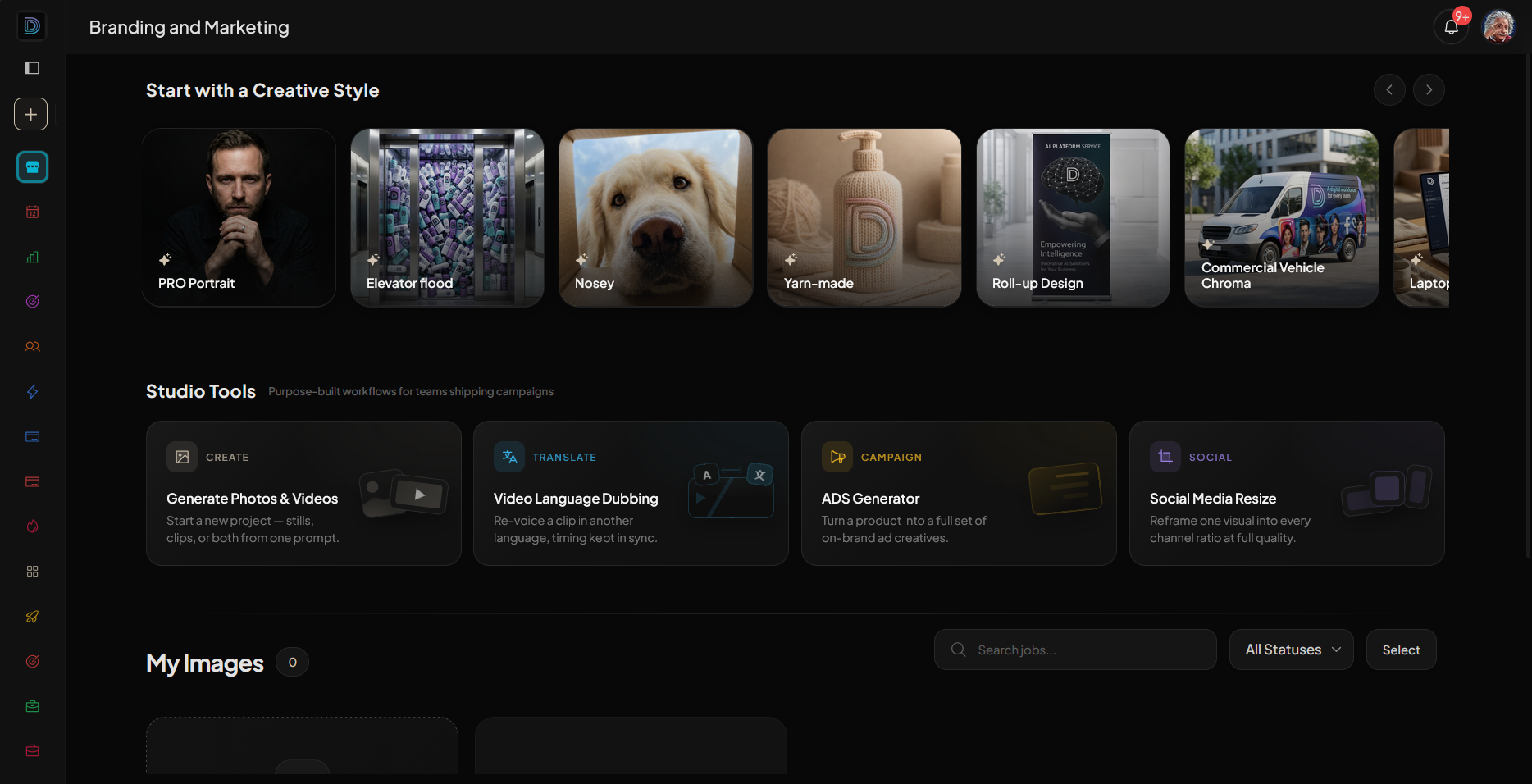
DIMA-AI provides a centralized platform that brings together generative AI, agentic workflows, knowledge management, and automation capabilities. Instead of juggling multiple subscriptions and integrations, organizations access comprehensive AI functionality through a single interface.
This unified approach eliminates context switching, maintains continuity across workflows, and enables AI systems to learn from patterns across the entire organization.
Designed for Business Transformation
While many AI tools focus on incremental productivity gains, DIMA-AI is built to enable fundamental business transformation. It supports the workflow redesign and process reimagination that separates AI leaders from followers.
Organizations can start with quick wins in specific departments and scale successful patterns enterprise-wide through a consistent platform and governance framework.
Enterprise-Grade Security and Governance
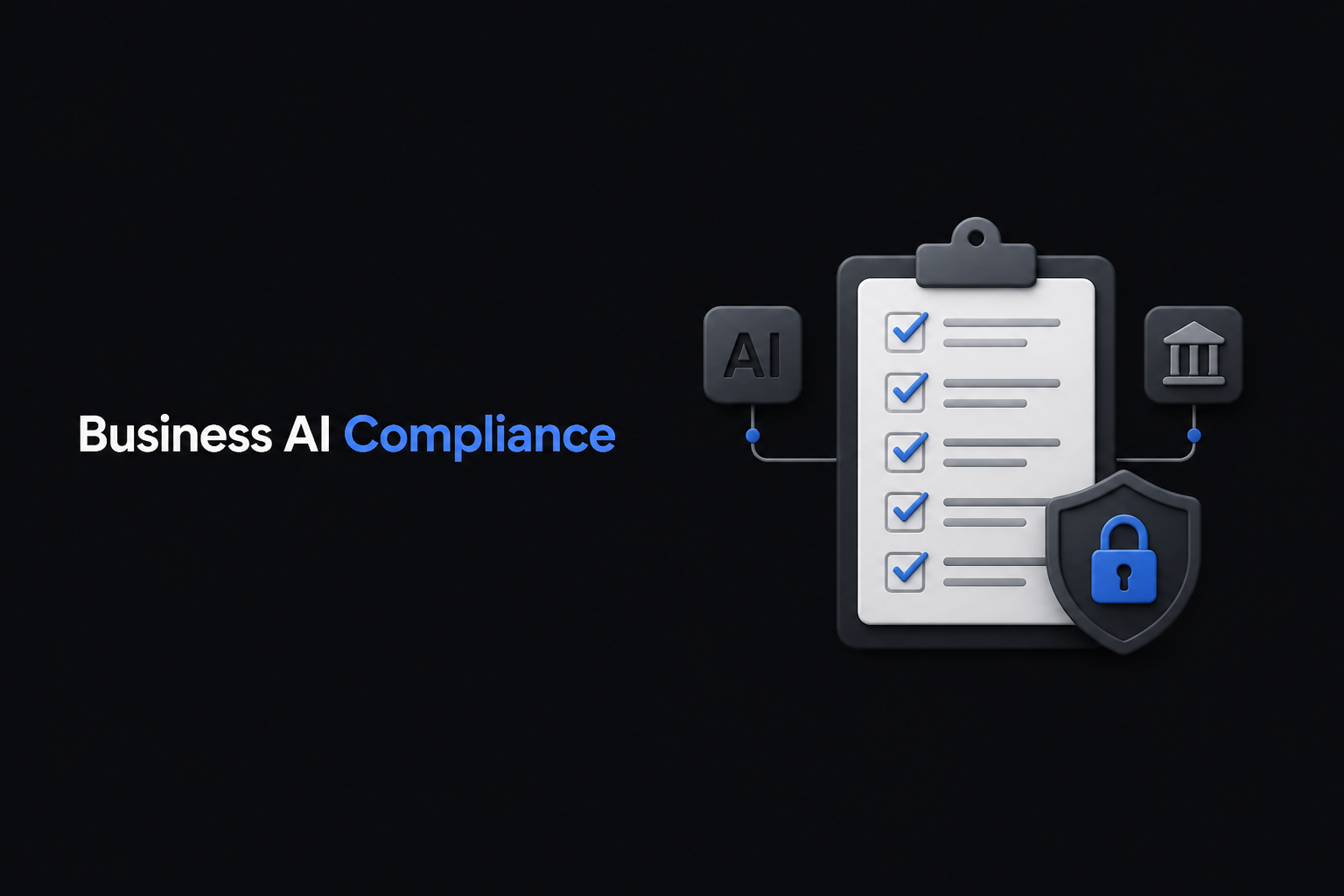
DIMA-AI incorporates robust security controls and governance capabilities from the ground up. Organizations maintain centralized visibility into AI usage, enforce consistent policies, and ensure compliance with evolving regulations.
This enterprise focus addresses the governance gap that prevents many organizations from scaling AI confidently.
Accelerated Time-to-Value
By providing pre-built integrations, industry-specific templates, and proven implementation frameworks, DIMA-AI reduces the time from deployment to measurable business impact.
Organizations avoid the lengthy integration projects and custom development work required by fragmented tool collections.
Frequently Asked Questions
What are the most important AI tools for small businesses?
Small businesses should prioritize AI tools that deliver immediate productivity gains with minimal implementation complexity. Generative AI for content creation, AI-powered customer service chatbots, and automated marketing platforms offer strong ROI for resource-constrained organizations. The key is selecting tools that integrate well with existing systems rather than creating additional complexity.
How much does AI implementation typically cost?
AI implementation costs vary dramatically based on scope and approach. Point solutions may cost a few hundred dollars monthly per user, while enterprise-wide transformations can require millions in technology, consulting, and change management. Most organizations achieve satisfactory ROI within two to four years, making AI a long-term strategic investment rather than a quick fix.
What's the difference between generative AI and agentic AI?
Generative AI creates content, analyzes information, and responds to prompts but requires human direction for each task. Agentic AI takes autonomous action, planning and executing multi-step workflows with minimal human intervention. AI agents are systems based on foundation models capable of acting in the real world, planning and executing multiple steps in a workflow.
How do I measure ROI from AI tools?
Effective AI ROI measurement combines quantitative metrics (cost savings, time reduction, revenue impact) with qualitative outcomes (employee satisfaction, innovation capacity, competitive differentiation). The most effective approach is to evaluate ROI at the use-case level, tied to the P&L, segmenting by efficiency plays via FTE-hour reduction and growth plays via incremental revenue.
What are the biggest risks of AI adoption?
Key risks include data privacy breaches, algorithmic bias, over-dependence on AI for critical decisions, and employee resistance to change. Only one in five companies has a mature model for governance of autonomous AI agents, highlighting governance as a critical risk area. Organizations must balance innovation with responsible deployment practices.
Should we build custom AI solutions or buy existing tools?
This depends on your organization's unique requirements, technical capabilities, and strategic priorities. 38% of organizations favor a hybrid approach combining in-house development with external tools, 32% lean on vendor-built solutions for speed and scalability, and 24% plan to invest in internal build capabilities. Most organizations benefit from a balanced approach that leverages vendor solutions for common needs while building custom capabilities for competitive differentiation.
Conclusion
The AI revolution is no longer coming—it's here. 88% of organizations now use AI regularly in at least one business function, and adoption continues to accelerate. The question facing business leaders isn't whether to adopt AI, but how to do so strategically.
Tool sprawl represents one of the greatest threats to realizing AI's potential. Organizations that accumulate disconnected point solutions create complexity, inefficiency, and governance challenges that undermine the value AI should deliver.
The path forward lies in unified AI platforms that orchestrate multiple capabilities within cohesive, well-governed ecosystems. These platforms enable the workflow redesign and business transformation that separate AI leaders from followers.
As you evaluate your AI strategy, consider whether your current approach positions you for sustainable competitive advantage or simply adds to the complexity burden. The organizations that will thrive in the AI era are those that move beyond tool accumulation to strategic platform adoption.
Ready to transform your business with unified AI? Explore how DIMA-AI can help you move from fragmented tools to integrated intelligence, delivering faster time-to-value and sustainable competitive advantage.
 DIMA
DIMA